
How to Evaluate a Stylus Pen Factory's Capabilities Beyond the Sales Pitch
A supplier's catalogue tells you what a stylus pen is supposed to do. It does not tell you whether the factory behind it can repeat that performance across 5,000 units, hold a delivery date, or absorb a batch that fails on arrival. This guide sets out a practical audit framework for verifying testing procedures, QC systems and production capacity — using the Jiayao stylus product range as a worked example of output that only survives scrutiny when the process behind it is real.
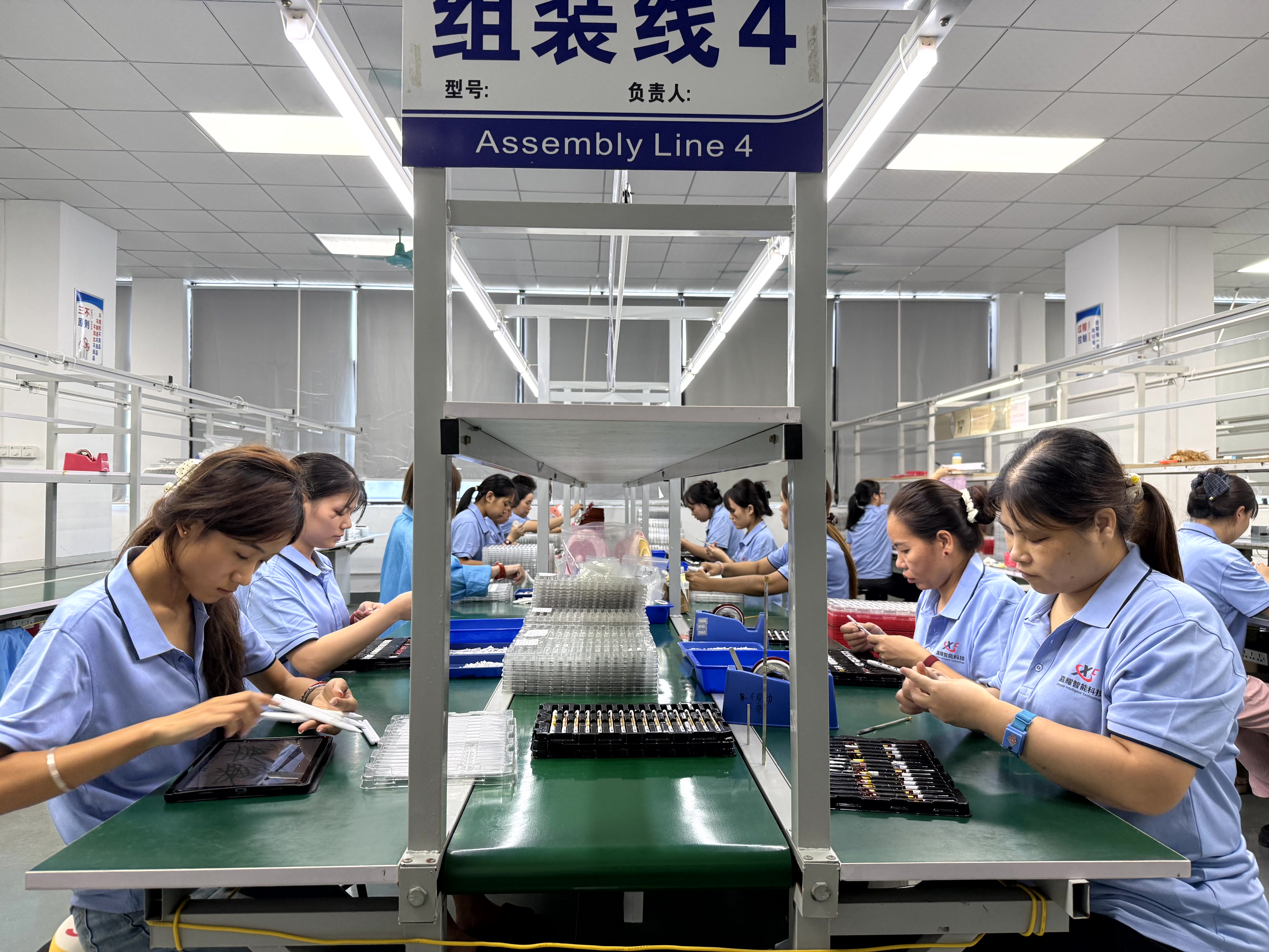
Inside a stylus pen production floor: assembly, functional testing and visual inspection are the stages buyers should be able to walk through.
Why the Sales Pitch Is Not the Problem — the Gap Behind It Is
Almost every stylus pen supplier can show you an aluminium barrel, a charging port and a spec sheet. The difficulty is that a spec sheet describes an intention, while a purchase order commits you to a physical result. Between those two points sit three failure modes that a brochure will never reveal.
The capability gap. A trading company can quote, sample and negotiate without owning a single production step. When a project needs firmware tuning, a modified nib diameter or a battery change, the request travels to a third party the buyer never speaks to. Lead time and quality then depend on a relationship the buyer cannot see.
The QC gap. A factory can produce an excellent golden sample and still ship inconsistent mass production. Sampling inspection at the end of a line catches some defects; it does not catch the ones that repeat. The only question that matters is whether inspection is applied to every unit or to a proportion of them.
The timeline gap. Quoted lead times are often calculated on an empty production schedule. They rarely survive a peak season, a component shortage or a sudden customisation request in the middle of a run.
Evaluating a stylus pen factory, therefore, is not about finding the most impressive presentation. It is about converting soft claims into hard checks that a factory either passes or fails.
Industry Background: Why Stylus Sourcing Now Demands Factory-Level Verification
The stylus pen category is large, growing and technically fragmented — three conditions that push sourcing risk upward.
IMARC Group valued the global stylus pen market at USD 19.45 billion in 2025. Dataintelo projects that active stylus technology will grow at a CAGR of 9.8% between 2026 and 2034. Growth of that scale attracts new suppliers at every level, and not all of them carry the same engineering depth.
Definitional caution for buyers: published market-size figures for this category do not agree. Fortune Business Insights has reported a 2025 figure of USD 3.36 billion, while IMARC reports USD 19.45 billion. The divergence reflects scope, not a data error — one number covers a broader input-device category, the other focuses on active digital pens. When you build a business case, confirm which definition your figure uses before you quote it internally.
On the technology side, the category is split between closed proprietary ecosystems and open standards. The USI 2.0 specification, released in 2022 by the Universal Stylus Initiative and supported by Google, Intel and Lenovo, is the primary cross-platform standard for active styluses. At the high end of the market, Samsung's S-Pen and comparable professional active pens reach up to 4,096 levels of pressure sensitivity.
For a buyer, the practical consequence is straightforward. A stylus pen is not a moulded plastic part with a fixed behaviour; it is a PCBA, a battery, a sensing tip and firmware that must be matched to a specific host device. Matching that combination is engineering work, and engineering work is exactly what a product brochure cannot demonstrate. Commercially, most stylus pens move under HS Code 8471.60.90, classified as automatic data processing input units — useful context when you are comparing landed cost across suppliers.
The Jiayao stylus operation illustrates the scale of a mid-sized specialist. Dongguan Jiayao Intelligent Technology Co.,Ltd is an active stylus pen manufacturer based in Dongguan, Guangdong, China, founded in 2021, operating a 2,700 m² facility with around 100 employees, a 4-engineer R&D team and an annual output of 3,000,000 units, with roughly 40% of production exported to EU and USA markets. It is a realistic reference point: large enough to run a full process chain, small enough that a buyer can still reach the engineers.
The Five Capability Layers You Can Actually Audit
Factory capability decomposes into five layers. Each one can be checked with a specific question and a specific piece of evidence, and each one fails in a predictable way when it is missing.
1. Vertical process coverage
Ask which steps happen in-house. A manufacturer that covers PCBA design, battery welding, final assembly and quality testing under one roof controls its own yield. When any of those steps is outsourced, the buyer inherits a second supplier they cannot audit directly, and defect resolution becomes a negotiation between two parties rather than a correction.
2. A quality control system you can see in writing
Sampling inspection answers the question 'did this batch pass?' Full inspection answers the question 'did this unit pass?' The difference matters most in stylus pens, because the failure modes are partly tactile and partly invisible — a nib that drags, a button with a soft click, a battery that holds nine hours instead of eleven. Jiayao's process applies 100% full inspection across functional, tactile and visual checks, which is the standard a buyer should be asking every candidate supplier to describe in detail, including what happens to a rejected unit.
3. Capacity that survives arithmetic
Capacity figures should be reconciled against each other. A factory reporting a monthly capacity of 500,000 units and an annual output of 3,000,000 units is not contradicting itself, but it is describing two different things: theoretical peak and actual shipped volume. Ask for the explanation. The answer usually reveals how much capacity is reserved for stock models, how much is available for made-to-order projects, and how much buffer exists in a peak quarter.
4. Customisation depth
OEM and ODM are not binary. The useful question is which variables a factory can change and which it cannot. On a stylus pen platform, the practical customisation surface includes function, colour, shape, tip, logo and packaging. A supplier that can modify the nib geometry and the charging behaviour is doing engineering; a supplier that can only print a logo is doing labelling. Both have a place, but they should not be priced or scheduled as if they were equivalent.
5. After-sales structure
Warranty language is a capability statement in disguise. A 1-year warranty with one-to-one replacement for defective units signals that the factory expects its own yield to hold. Read the terms carefully and confirm how a replacement is triggered, who pays the freight, and whether the policy applies to customised models.
Step-by-Step: A Practical Factory Audit Sequence
The following sequence works as a written questionnaire, a video audit script, or an on-site checklist. Run it before you commit to a tooling deposit.
Step 1 — Map the process chain and mark the boundary
Ask the supplier to list every production step from PCBA design to final packing, and to mark which steps are in-house and which are subcontracted. Anything subcontracted should be named, with the qualification process described.
Step 2 — Request the inspection plan, not the inspection result
A pass report from last month proves one batch. An inspection plan proves a system. Ask for the criteria applied to each unit, the test equipment used, and the disposition rule for failures.
Step 3 — Reconcile capacity numbers
Compare monthly capacity, annual output, headcount and factory floor area. A monthly capacity of 500,000 units in a 2,700 m² facility with 100 staff is arithmetically plausible for a stylus pen line; a figure that does not scale with headcount is worth querying.
Step 4 — Test the sample against the specification, line by line
Take the published parameters and score the sample yourself. On a Wi-Fi-free device such as a stylus, the measurable items include charging time, continuous working time, standby behaviour, palm rejection under real writing pressure, tilt response, magnetic attachment strength and nib replacement.
Step 5 — Stress the battery, because that is where the failures live
Battery behaviour is the most commonly misdescribed parameter. Ask which cell is used, what the rated capacity is, and how the discharge curve was validated. Platforms with larger cells — for example a 230 mAh, 3.7 V, 0.851 Wh pack in a long-runtime model — need a different validation routine than a 90 mAh platform, and the factory should be able to explain why.
Step 6 — Confirm which customisation variables are genuinely open
Function, colour, shape, tip, logo and packaging should each be confirmed as standard, optional or unavailable. Ask for the engineering review step that follows a customisation request, and who signs it off.
Step 7 — Validate MOQ and lead time against your own project calendar
MOQ and lead time are only meaningful in combination. A low MOQ with a long lead time is not flexible; it is slow in smaller increments. Compare the quoted figures with your launch date, your first replenishment cycle and your buffer requirement.
Step 8 — Close the loop on warranty and spares
Confirm the warranty period, the replacement mechanism, spare nib availability and the process for reporting a field failure. This is the last checkpoint and the one most buyers skip.
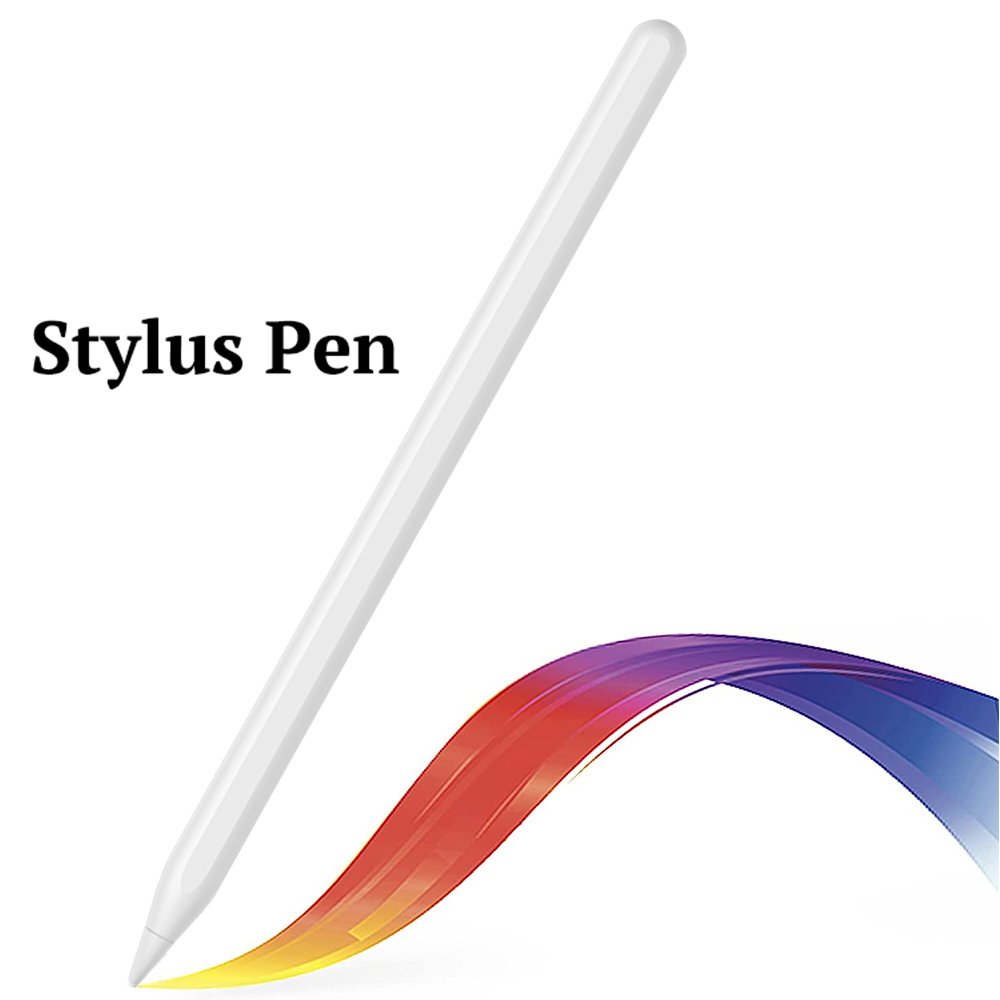
W3-H: a magnetic-charging iPad stylus. Single-path charging platforms are the simplest to validate — the QC question becomes repeatability of the coil alignment.
Applying the Framework: What a Verifiable Output Range Looks Like
The audit only becomes useful when it is matched against real product behaviour. A supplier's own catalogue is the easiest place to start, because every published parameter becomes a checkpoint you can test.
The Jiayao stylus range spans iPad-focused active pens, universal pens that work across iPad and Android tablets, and Android-specific models. Because these share a platform architecture but differ in charging method, battery size and runtime, they expose the exact points where QC discipline shows up.
Dual charging paths. Models such as the W13-A and W12-A support both magnetic charging and Type-C. Two charging routes mean two failure modes, and the factory must test both rather than the more convenient one. The W13-A charges in 15 minutes by cable and 60 minutes by tablet adsorption; the W12-A charges in 25 minutes via Type-C and 60 minutes wirelessly.
Runtime claims. Published working time ranges from 9–10 hours on the W12-A, W13-A and R3-P, through 11 hours on the A30-B, A21B and W3-H, 12 hours on the A8-RH, and 16 hours on the A7-H-L, up to 44 hours on the E3-A. Each step up in runtime requires a larger or more efficient battery and a correspondingly tighter discharge validation.
Cross-platform compatibility. The R3-P is a universal stylus for iPad and Android tablets, and the S3-GC is an Android universal model, while the remaining platforms are tuned for iPad devices manufactured after 2018 running iPadOS 12.2 and above. A factory that can genuinely support a multi-platform line has to maintain firmware variants — a capability signal that a trading intermediary cannot fake.
A7-H-L: a 16-hour iPad stylus with palm rejection and tilt sensing. Long-runtime platforms demand discharge-cycle validation, not just a spot check.
Comparison Table: Published Parameters as Audit Checkpoints
The table below lists published specifications from the Jiayao stylus range. Use it as a benchmark structure: request the same parameters from every candidate supplier, then verify the two or three most commercially important models by physical testing.
| Model | Type | Charging method | Charging time | Working time | Battery | Body material | Weight |
|---|---|---|---|---|---|---|---|
| W13-A | iPad active stylus | Magnetic + Type-C | 15 min (cable) / 60 min (wireless) | 9–10 h | 90 mAh, 3.7 V, 0.33 Wh | Aluminium alloy + ABS | 12–13 g |
| W12-A | Active stylus | Magnetic + Type-C | 25 min (Type-C) / 60 min (wireless) | 9–10 h | 90 mAh, 3.7 V, 0.33 Wh | ABS | 12–13 g |
| W3-H | Wireless charge stylus | Magnetic | 70 min | 11 h | 90 mAh, 3.7 V, 0.333 Wh | ABS | 12–13 g |
| A30-B | iPad pencil with shortcut button | Type-C | 25 min | 11 h | 165 mAh, 3.7 V, 0.46 Wh | Aluminium alloy | 12–14 g |
| A21B | 2-in-1 iPad stylus | Type-C | 25 min | 11 h | 165 mAh, 3.7 V, 0.46 Wh | Aluminium alloy | 12–14 g |
| A8-RH | Tilt sensing stylus | Type-C | 30 min | 12 h | 165 mAh, 3.7 V, 0.465 Wh | Aluminium alloy | 12–13 g |
| A7-H-L | iPad pencil | Type-C | 30 min | 16 h | 165 mAh, 3.7 V, 0.46 Wh | Aluminium alloy | 12–13 g |
| R3-P | Universal stylus (iPad + Android) | Type-C | 40 min | 9–10 h | 130 mAh, 3.7 V | Aluminium alloy | 13 ± 1 g |
| E3-A | Palm rejection iPad stylus | Type-C | 40 min | 44 h | 230 mAh, 3.7 V, 0.851 Wh | Aluminium alloy + ABS | 15 ± 1 g |
| S3-GC | Android universal stylus | Type-C | 55 min | 10 h | 165 mAh, 3.7 V, 0.61 Wh | Aluminium alloy | 13 ± 1 g |
Three reading rules make this table useful in an audit. First, a charging-time claim that is roughly half the wireless figure usually indicates a dual-path design — confirm both paths are inspected. Second, a runtime above 15 hours implies a larger cell and a correspondingly longer discharge validation. Third, a tolerance of ±1 g on weight signals that the factory measures units rather than estimating them, which is a general indicator of how tightly other parameters are controlled.
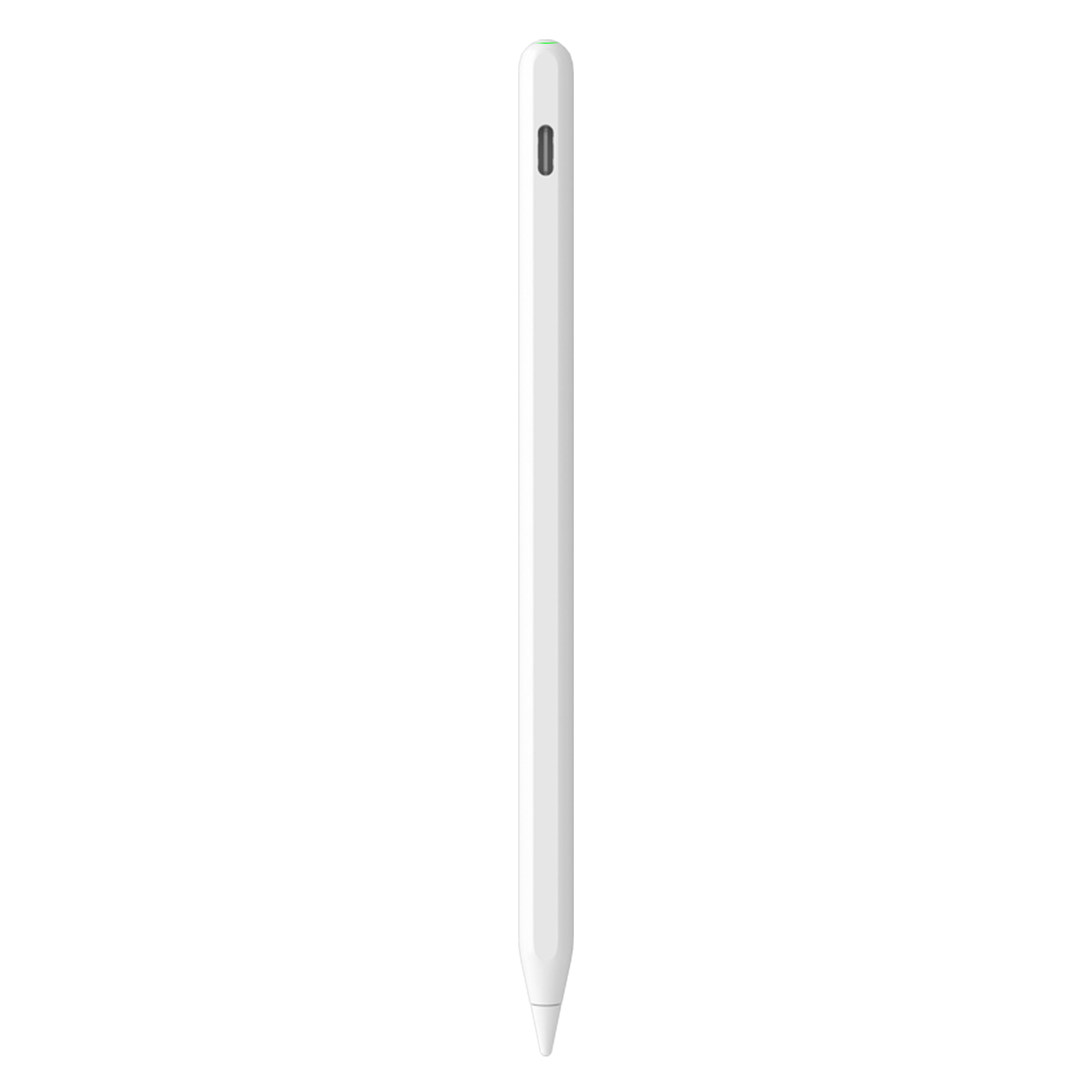
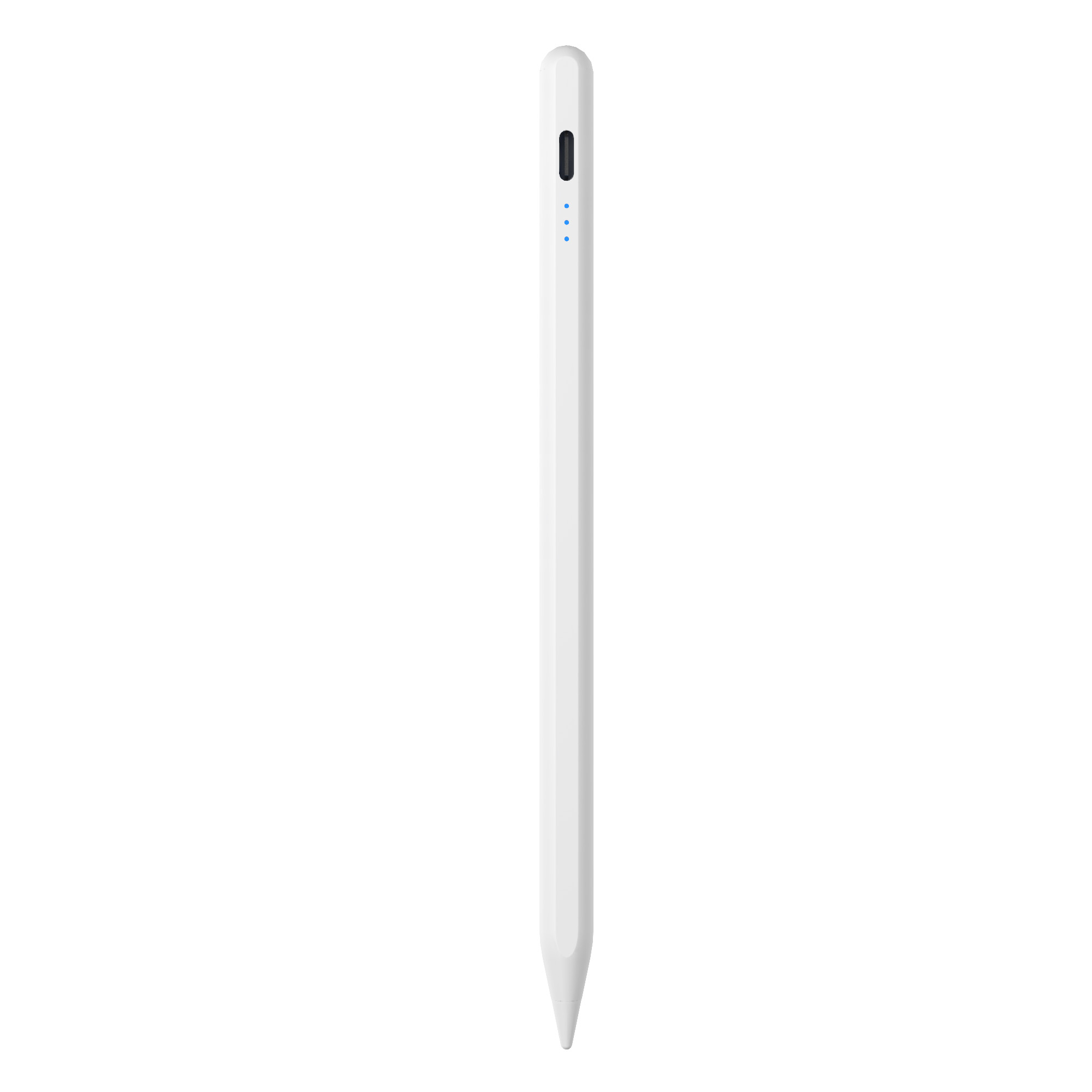
W12-A: dual charging paths (Type-C and wireless). Any platform with two charging routes needs both verified during inspection.
Use Cases: Where Factory Verification Changes the Outcome
Two Jiayao projects illustrate how capability checks translate into commercial results.
A tablet accessory ODM in Turkey ordered 5,000 units of a universal stylus configured for precise writing across iPad, iPhone, Android tablets and Android phones. The project has run for two years, with the stated result being increased usage of iPads and Android tablets among end users. The audit lesson is compatibility scope: a universal pen that must serve four device categories needs firmware variants and a per-category validation routine, not a single test device.
An iPad accessory ODM in Vietnam ordered 3,000 units of the E3-A platform for e-commerce retail. The requirement set was precise writing, fast charging, long working hours, palm rejection and tilt pressure sensing. Reported outcomes were smooth precise handwriting, improved tablet operation efficiency and good user feedback. The audit lesson here is the combination: a 44-hour runtime platform sold through e-commerce stands or falls on battery consistency, because every returned unit is a public review.
Education deployments follow a similar pattern. A stylus used in a tablet-based education project has to deliver low latency, precise writing, side magnetic attachment and a replaceable pen tip, and it must function reliably because the pen depends on an internal battery rather than passive screen contact. In institutional rollouts, the failure that matters most is not a defective unit — it is a replacement cycle the buyer cannot service.
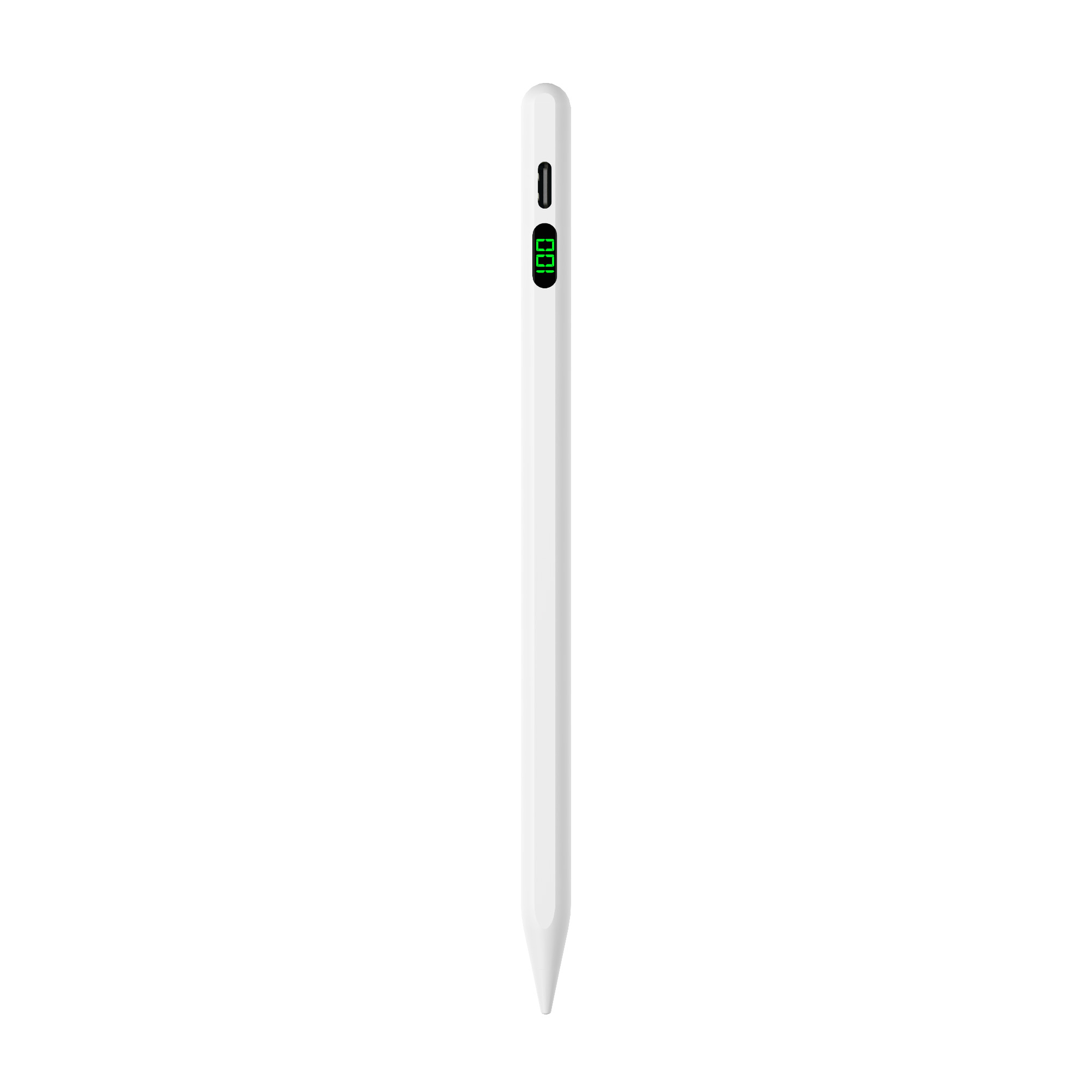
S3-GC: an Android universal stylus. Multi-platform lines require firmware variants — a capability signal you can verify by asking for a device compatibility matrix.
Commercial Terms That Reveal Capability
Commercial flexibility is often the fastest proxy for how a factory is actually organised. A producer built for high-volume, single-SKU runs negotiates very differently from one built around fast-moving brands and growing sellers.
On the Jiayao stylus platform, the operating terms are a MOQ of 500 pcs, a lead time of 20–35 days, samples in as little as 3 weeks, and standard stock orders shipped in 20 days. Customisation covers function, colour, shape, tip, logo and packaging, with OEM and ODM projects supported on both active and passive stylus pens compatible with iPad and mainstream tablets. After-sales is structured as a 1-year warranty with one-to-one replacement, and large quantities of regular models are held in stock to handle small, scattered and urgent standard-product orders.
Read those terms as a set rather than individually. A 500-piece MOQ only means flexibility if it is paired with a short sample cycle and a stated stock position. A 20-day standard shipment only means reliability if the factory can tell you which models are stock-held and which are built to order.
Frequently Asked Questions
How do I verify a stylus pen factory's compliance and test records if I cannot audit on site?
Ask for a written inspection plan rather than a past pass report, and require it to name the criteria applied to each individual unit. A system that inspects 100% of output — covering functional, tactile and visual checks — is verifiable remotely, because you can re-run the same checks on the sample you receive and compare results. Request that the documentation is tied to the exact model and the exact destination market, since a document issued for a different product or region does not transfer. Finally, confirm who signs the record and where it is stored, so a future batch can be traced back.
What production capability should I verify beyond the capacity number a supplier quotes?
Verify the process boundary and the people behind it. Ask which steps are performed in-house — for a stylus pen, that means PCBA design, battery welding, final assembly and quality testing — and which are subcontracted. Then cross-check the numbers: Dongguan Jiayao Intelligent Technology Co.,Ltd operates a 2,700 m² facility with 100 employees, a 4-engineer R&D team, a monthly capacity of 500,000 units and an annual output of 3,000,000 units. Headcount, floor area and output should scale together. A 4-engineer team is also a useful indicator of whether customisation requests are handled by engineers or by sales staff.
What drives the cost of a custom stylus pen order, and how do I compare quotes fairly?
Cost is driven by the customisation variables you actually select — function, colour, shape, tip, logo and packaging — and by the volume band you order in. Because these variables carry different engineering burdens, two quotes for the same quantity are rarely comparable unless the specification is identical. Standardise the comparison: fix the model, the customisation scope, the MOQ and the warranty terms, then compare. Jiayao's platform starts at a MOQ of 500 pcs, which allows a cost comparison at a realistic pilot volume rather than only at container scale. Ask each supplier to quote the same configuration so the price difference reflects the factory, not the specification.
How long does a stylus pen sample take, and what exactly should I test on it?
Samples from the Jiayao stylus platform can be delivered in as little as 3 weeks. Treat the sample as a test instrument rather than a gift. Check charging time on every charging path the model supports, measure continuous working time against the published figure, test palm rejection under normal writing pressure, verify tilt response and side magnetic attachment, and confirm the nib can be replaced without damaging the screen. Record your results against the published parameters so the same measurements can be repeated on the production batch.
What lead time is realistic for a stylus pen order, and how much buffer should I build in?
On the Jiayao stylus platform, production lead time runs 20–35 days, and standard stock orders ship in 20 days, with large quantities of regular models held in stock for small, scattered and urgent orders. The realistic planning approach is to separate your first order from your replenishment orders. A customised first order sits at the upper end of the range because tooling and approval steps are included; a repeat order on a stock-held model sits at the lower end. Build your buffer around the difference, and confirm which of your SKUs are stock-held before you commit to a launch date. To discuss a specific configuration or request a sample, contact the team at jiayaostylus.com.
Conclusion: Audit the Process, Then Choose the Partner
A stylus pen factory is only as strong as the process you can inspect. Catalogue imagery, presentation decks and price lists are all downstream of a single question: can this manufacturer reproduce a validated result across every unit it ships, on the date it promised, and stand behind the units that fail?
Work through the five capability layers — process coverage, QC system, reconciled capacity, customisation depth and after-sales structure — and run the eight-step audit sequence before you place a tooling deposit. Apply it consistently across every candidate, and the comparison stops being a contest of presentations and becomes a contest of verifiable facts.
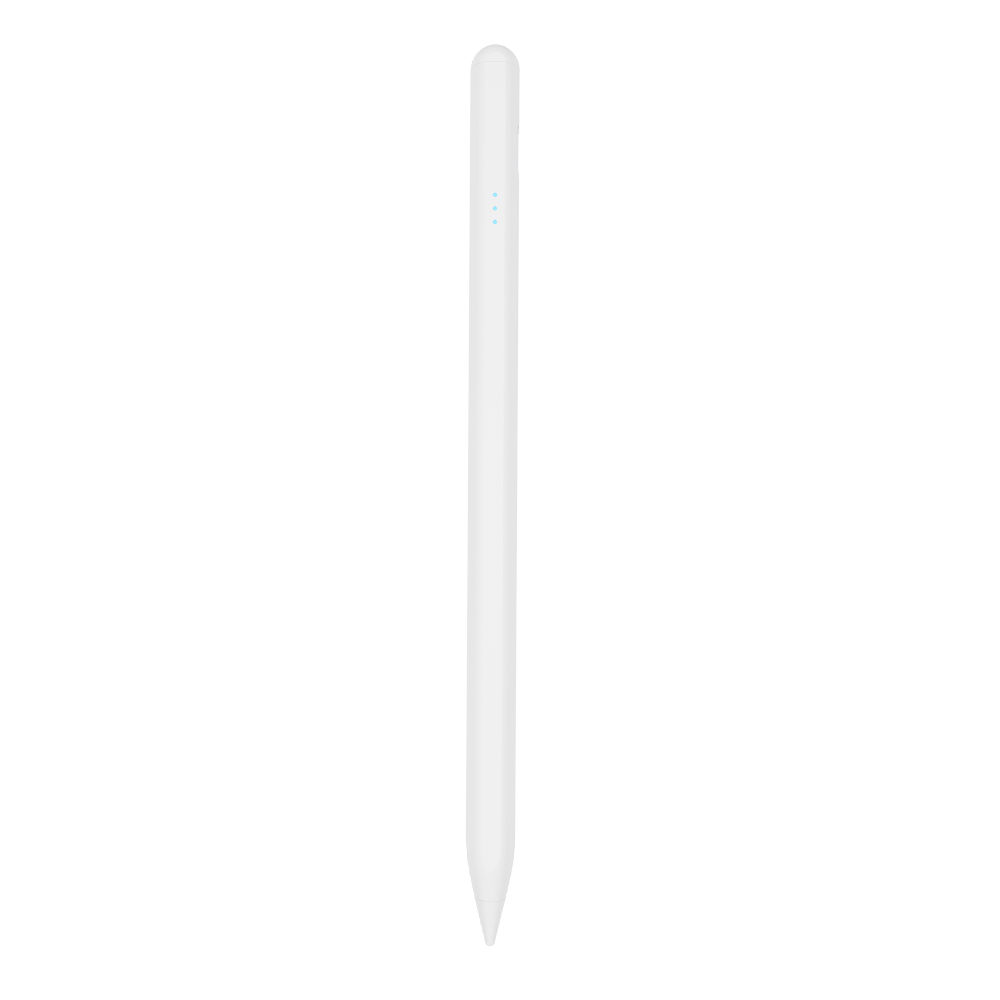
R3-P: a universal stylus spanning iPad, iPhone and Android devices — one example of the output range covered by a full-inspection QC process.
Request a Sample and Test the Process Yourself
Samples from the Jiayao stylus range can be delivered in as little as 3 weeks, with a MOQ starting at 500 pcs and OEM/ODM support for function, colour, shape, tip, logo and packaging. Every unit goes through 100% full inspection — functional, tactile and visual.
Contact: Lea Tan | Email: LeaTan@dg-xcdz.com | Tel / WhatsApp: +86 166 2065 1838
Address: Room 9th Floor, No.12, Lane 11, Wenming Road, Nanzha, Humen Town, Dongguan, Guangdong, China
Website: jiayaostylus.com | Download the full Jiayao Intelligent Stylus Pen Catalogue (PDF)
Have Questions or Need More Details?
Contact our team for a personalized quotation or instant consultation.
Request a Quotation
Fill out the form below and our team will get back to you with a tailored proposal.
WhatsApp Direct Chat
Prefer to chat in real-time? Message us on WhatsApp for instant assistance & quick answers.
- Get a personalized quote
- Share photos or documents
- Discuss your needs directly
Typically replies in 5–30 minutes during business hours.