Stylus Pen Supplier Evaluation: Verify Capability, Secure Delivery
A stylus pen supplier is not evaluated by reading a quotation. It is evaluated by testing four things in a fixed order: what the supplier can actually build, how deep its process control runs, what the purchasing terms and acceptance criteria will be, and whether the delivery date is backed by capability rather than by optimism. Unit price is the output of those four answers, not the input to them.
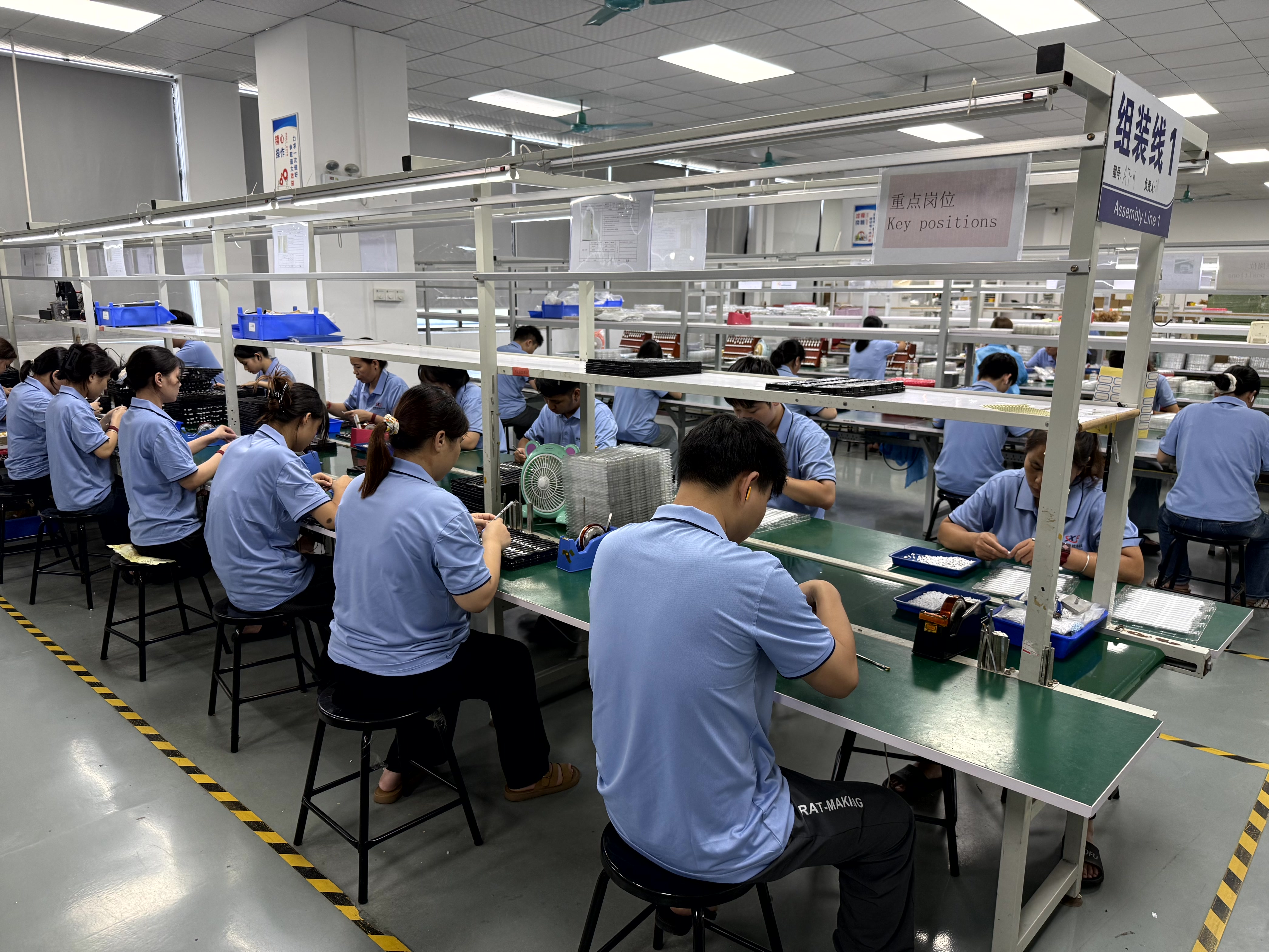
Direct answer: Evaluate a stylus pen supplier on product range, process depth, purchasing terms and acceptance criteria, then delivery assurance — in that sequence. A supplier that cannot show in-house control of PCBA design, battery welding, assembly and testing cannot credibly guarantee a ship date for active stylus pens, because the same processes that determine performance also determine whether the order ships complete.
The Evaluation Problem: Why Price-First Sourcing Fails on Stylus Pens
The word “stylus pen” covers two products with different production logic. A passive capacitive stylus is essentially a conductive tip and a housing. An active stylus pen adds a PCBA, a battery, charging circuitry and firmware that must behave correctly on the target tablet. A factory set up to assemble passive pens does not automatically possess the capability to build an iPad active stylus pen — and a buyer who compares those two suppliers on unit price alone is comparing two different manufacturing businesses.
That mismatch is where most sourcing problems begin. An order is quoted against a sample that was built in a well-resourced engineering phase, then produced on a line where one process step — battery welding, firmware flashing, or functional testing — is outsourced or loosely controlled. Performance drifts, the inspection report does not match what was promised, and the delivery date slides because the bottleneck was never inside the supplier’s own building.
Two questions that importers already ask frame the evaluation correctly:
- “What should I buy, passive stylus or active stylus?” — a product decision that determines which capability you must verify.
- “What are the purchasing terms and acceptance criteria?” — a contract decision that determines whether you can enforce what you verified.
Everything else in a supplier evaluation is a detail attached to one of these two questions. A supplier that cannot answer both in writing, with process evidence behind the answer, is not shortlisted — it is deferred.
Industry Background: One Category Name, Several Technology Tracks
The stylus pen category spans passive capacitive stylus pens, tablet stylus pens for iPad, active stylus pens for Android devices, universal active stylus pens, and pens built around open standards. USI 2.0, the Universal Stylus Initiative specification released in 2022 and supported by Google, Intel and Lenovo, is the primary cross-platform standard for active styluses, while proprietary protocols remain in use — Samsung S-Pen and high-end professional active pens, for example, feature up to 4,096 levels of pressure sensitivity.
Commercially, the category is expanding. IMARC Group values the global stylus pen market at USD 19.45 billion in 2025, and Dataintelo projects active stylus technology growth at a CAGR of 9.8% from 2026 to 2034. Treat headline market size as directional: different research houses scope the category differently, and narrower definitions of active digital pens produce materially smaller figures than broad input-device definitions. The useful signal is not the absolute number but the direction — active stylus volume is rising, and with it the number of suppliers claiming active capability.
Customs classification is a practical detail that belongs in the evaluation, not in a forwarding email. Stylus pens are typically classified under HS Code 8471.60.90 as automatic data processing input units, which means the commercial invoice description, the product specification and the declared classification should describe the same product. A supplier that cannot supply consistent product documentation creates a customs problem, not just a paperwork one.
The structural consequence for buyers is simple: the supply base is mixed. Some factories design and build the electronics; some assemble; some trade. Supplier evaluation has to separate those three before commercial terms are discussed.
The Four-Layer Framework for Verifying a Stylus Pen Supplier
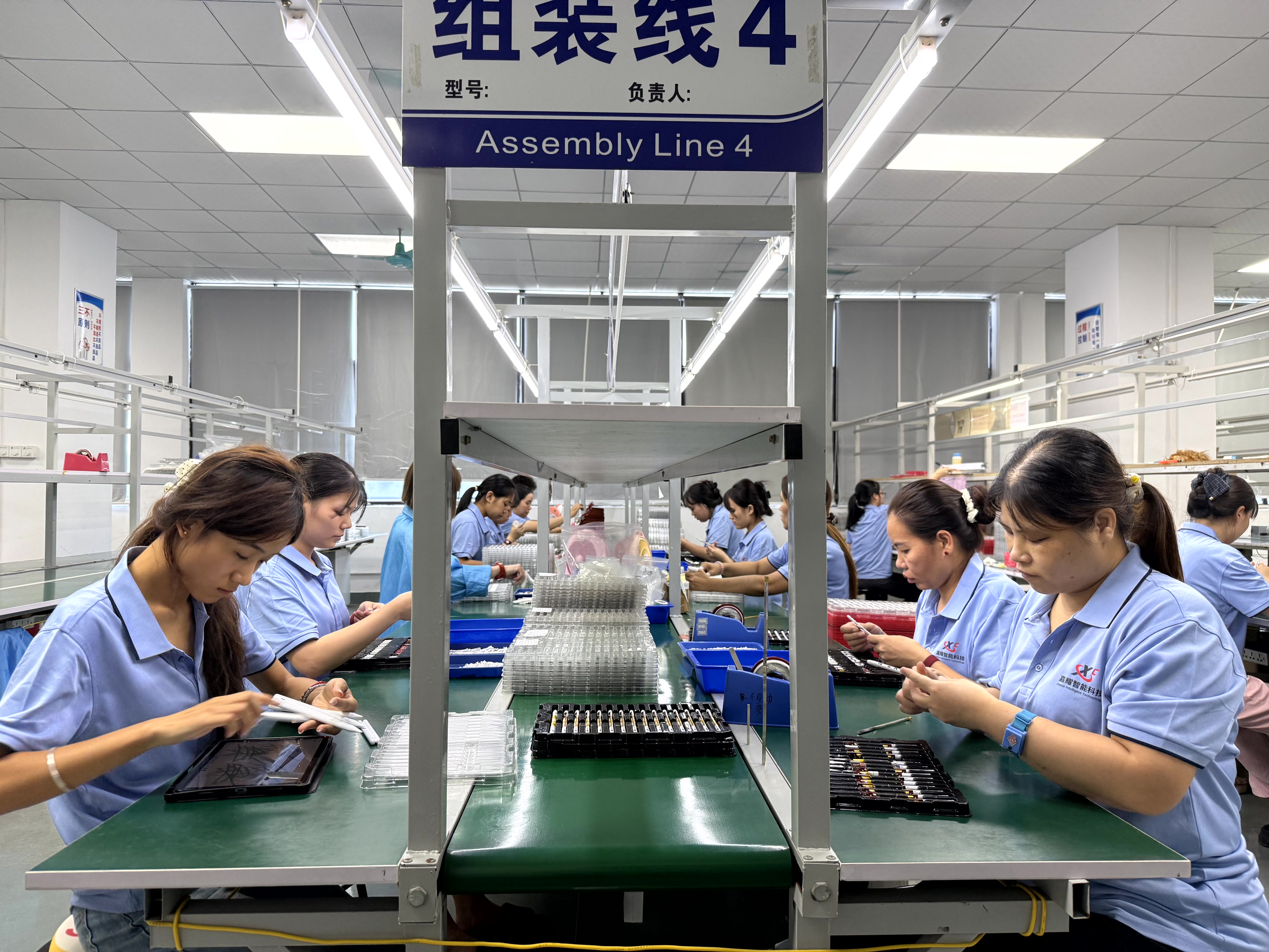
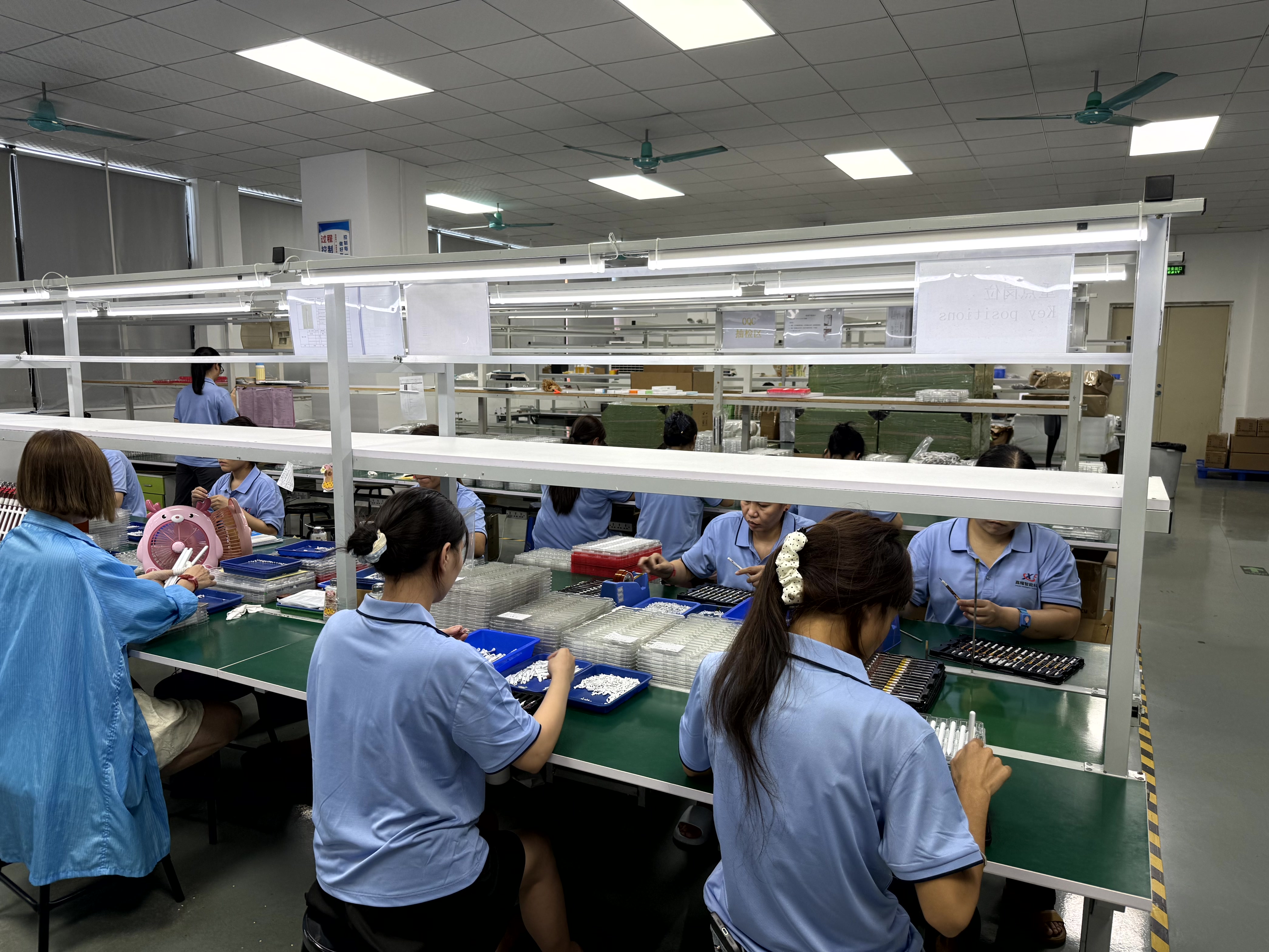
Dongguan Jiayao Intelligent Technology Co.,Ltd — trading as Jiayao Stylus — is an active stylus pen manufacturer based in Dongguan, Guangdong, China, founded in 2021, operating a 2,700m² factory with 100 employees and an annual output of 3,000,000 units, exporting approximately 40% of production to the EU and USA. Its stated process scope — PCBA design, battery welding, final assembly and quality testing — illustrates what the four verification layers are designed to test.
Layer 1 — Product Range Verification
Confirm which stylus types the supplier builds, in writing, before discussing price. The relevant split is not the marketing category but the technical one: passive versus active, and iPad versus Android/universal.
Ask for: a written list covering iPad stylus pen, Android stylus pen and general/universal stylus pen models, with active and passive clearly separated. Jiayao Stylus supports both OEM and ODM projects, including active and passive stylus pens compatible with iPad and mainstream tablets.
Weak signal: a catalogue that mixes active and passive models without labelling them, or a supplier that answers an iPad-specific question with a universal-pen datasheet.
Layer 2 — Process Depth Verification
Active stylus performance is set at the PCBA and battery stage. If those steps sit outside the supplier’s control, functional behaviour cannot be tuned for your market, and a production issue has to travel through a third party to be resolved.
Ask for: a process map naming which steps are performed in-house. Jiayao’s core capabilities cover PCBA design and battery welding through to final assembly and quality testing, supported by a 4-engineer R&D team.
Weak signal: “we have a partner factory” offered without naming which step the partner performs.
Layer 3 — Purchasing Terms and Acceptance Criteria
Terms define what you buy; acceptance criteria define how you reject it. Both must be fixed before the deposit, because criteria agreed after production starts are not criteria — they are negotiation.
Ask for: minimum order quantity per model, sample lead time, production lead time, customisation scope, and the inspection method with pass/fail definitions. Every stylus produced by Jiayao goes through 100% full inspection covering functional, tactile and visual checks. Customisation is supported on a sample basis, covering logo, packaging, function and Bluetooth name.
Weak signal: “quality is guaranteed” with no inspection method, sample size or defect definition attached.
Layer 4 — Delivery Assurance
Delivery dates should be traced back to capacity and stock, not to a calendar. Flexible MOQs, samples in as little as 3 weeks, standard orders shipped in 20 days, and a stock of regular models that covers small, scattered and urgent orders — these are the mechanisms that make a date defensible.
Ask for: which delay causes are inside the supplier’s control, which models are held in stock, and what happens to the schedule if a component is short.
Weak signal: a lead time quoted without stating whether samples, tooling or component procurement are included in it.
Step-by-Step: Running the Evaluation in Seven Steps
Step 1 — Fix the product specification first
Decide passive or active before you contact suppliers, because the answer changes which factory you need. Active stylus pens are the option associated with precise writing, no latency and no writing offset; the active pen also carries a higher cost and requires regular charging and a replaceable pen tip. Passive pens avoid charging, which suits tapping and navigation use. If your market is note-taking and drawing on iPad, you are buying active — and therefore you are verifying PCBA and battery capability, not just assembly.
Step 2 — Match the range to your line card
Confirm the supplier covers the exact combination you sell: iPad stylus pen, Android stylus pen, universal stylus pen, or a mix. Range breadth matters commercially because it reduces the number of supplier relationships per purchase order, but only if the breadth is real rather than catalogued.
Step 3 — Verify process depth at the step level
Walk the process map: PCBA design, battery welding, assembly, testing. Ask which step produces the performance your customers notice — latency, writing offset, runtime — and confirm that step is under the supplier’s own quality system. A supplier with a 4-engineer R&D team can typically describe how a function change is implemented; one without an engineering function usually cannot.
Step 4 — Convert terms and criteria into the contract
Write the acceptance criteria in the purchase order: inspection type, checks performed, and the definition of a defect. Pair that with the purchasing terms — MOQ, sample lead time, production lead time, customisation scope, after-sales obligations. Documentation consistency belongs here too: product description, specification and HS classification should align before shipment.
Step 5 — Validate with a sample, not a brochure
Test the sample on the exact tablet model you sell. Compare measured behaviour against the written specification. Jiayao quotes samples in as little as 3 weeks, which is short enough to test before committing to a seasonal window. Evaluate tactile feel and visual finish at the same time — those are the checks that a 100% full inspection routine covers in production, so they should be visible in the sample too.
Step 6 — Stress-test the delivery commitment
Ask what the quoted lead time includes, which models are stocked, and how urgent or fragmented orders are handled. A supplier holding quantities of regular models in stock can absorb small and scattered orders that a pure make-to-order factory will push to the back of the queue. Standard orders at Jiayao ship in 20 days, which should be treated as the production window — not as a door-to-door date — and planned against accordingly.
Step 7 — Define the customisation and after-sales boundary
Customisation scope should be listed by item: logo, packaging, function, Bluetooth name. After-sales scope should be listed by obligation: replacement of defective units, pen tip supply, and the contact who owns the issue. A one-stop processing service is only useful if the boundary of that service is written down.
Use Cases: How the Framework Changes the Decision
Case 1 — First order from a distributor
A distributor testing the category needs low volume and fast proof. The binding constraint is MOQ flexibility and sample speed, not unit price. A supplier built for fast-moving brands and growing sellers — flexible MOQs, samples in as little as 3 weeks — removes the risk of a large first commitment on an unproven SKU.
Case 2 — Brand owner running an OEM active stylus programme
Here the requirement is function-level customisation and control of the electronics. The evaluation shifts to PCBA design ownership, firmware behaviour, and whether logo, packaging, function and Bluetooth name can all be changed within the same production flow. Range alone is not sufficient evidence.
Case 3 — Urgent restock before a selling season
When the window is fixed, delivery assurance outranks every other criterion. Stock of regular models covering small, scattered and urgent orders is the mechanism to verify — a factory with no stock position cannot compress a 20-day production cycle by wishing it shorter.
Case 4 — Multi-market importer shipping to the EU and USA
Two markets mean two documentation sets and one product specification that must satisfy both. A supplier exporting regularly to the EU and USA already operates inside that documentation routine, which reduces the chance of a classification or description mismatch at clearance.
Comparison Table: Passive and Active Stylus Pens, and What Each Requires From a Supplier
| Dimension | Passive stylus pen | Active stylus pen | What to verify with the supplier |
|---|---|---|---|
| Writing behaviour | Contact-based input; no electronic latency or offset specification is quoted in this comparison | Precise writing, no latency, no offset | A written performance statement, then a sample test on your target tablet |
| Performance reference | Not applicable | Latency <8ms; writing offset <0.5mm | Confirm whether the figures apply to the exact model you are ordering |
| Cost position | Lower cost structure | Higher cost | Compare total landed cost per model, not unit price across categories |
| Power and maintenance | No charging required | Requires regular charging; replaceable pen tip | Confirm charging method, runtime claim and spare tip supply |
| Runtime | Not applicable | Up to 11-hour continuous working time per full charge | Test runtime on a sample under your own usage pattern |
| Best for | Basic tapping and navigation use | Writing on the iPad/tablet | Match the model to the buyer’s actual use case, not to the price tier |
| Production capability required | Tip and housing assembly, tactile and visual checks | PCBA design, battery welding, assembly, functional testing | Ask which of these steps is in-house; that answer defines the supplier type |
Comparison Table: Evaluation Layers, Evidence to Request, and Weak Answers
| Evaluation layer | Evidence to request | A weak answer looks like |
|---|---|---|
| Product range | Written model list separating iPad, Android and universal pens; active and passive labelled | One undifferentiated catalogue page |
| Process depth | Process map: PCBA design, battery welding, assembly, testing — marked in-house or outsourced | “Partner factory” with no step named |
| Purchasing terms | MOQ per model, sample lead time, production lead time, customisation scope, after-sales scope | Lead time quoted without stating what it includes |
| Acceptance criteria | Inspection method and pass/fail definitions; 100% full inspection covering functional, tactile and visual checks | “Quality is guaranteed” with no method |
| Delivery assurance | Stock position for regular models; stated handling of small and urgent orders | A date with no capacity or stock behind it |
| Documentation | Consistent product description and classification, typically HS Code 8471.60.90 | Invoice description that does not match the specification |
FAQ
What are the purchasing terms and acceptance criteria I should fix before ordering stylus pens?
Purchasing terms state what is being bought and on what schedule: the model list, whether each model is passive or active, MOQ per model, sample lead time, production lead time, customisation scope and after-sales obligations. Acceptance criteria state how the goods will be judged: the inspection method and the pass/fail definition. At Jiayao, every stylus produced goes through 100% full inspection covering functional, tactile and visual checks. Documentation belongs in the same document set — stylus pens are typically classified under HS Code 8471.60.90 as automatic data processing input units, so the invoice description and the specification should describe the same product. Both parts should be agreed before the deposit, because criteria negotiated after production starts are not criteria.
Which active stylus pen manufacturer offers better palm rejection and low latency?
Palm rejection and low latency are function-level behaviours, so they have to be judged per model and on your target device rather than inferred from the category. Four checks separate a real capability from a claim: a written performance statement including latency and writing offset — active pen specifications used in this comparison cite latency <8ms and writing offset <0.5mm; a sample test on the exact iPad generation or Android tablet you sell; confirmation that the supplier controls PCBA design and firmware rather than assembling a purchased module, because that determines whether behaviour can be adjusted at all; and a stated inspection routine covering functional checks. Jiayao covers PCBA design, battery welding, final assembly and quality testing in-house with a 4-engineer R&D team, which is the layer at which writing behaviour is set. Ask each shortlisted supplier the same four questions and compare the answers, not the adjectives.
Is an active stylus pen always more expensive than a passive one, and is the difference worth it?
The active pen carries a higher cost than the passive pen in this comparison, because it includes electronics, a battery and charging, and firmware. What that cost buys is writing performance: precise writing with no latency and no offset, plus up to 11-hour continuous working time per full charge. What it also adds is operational overhead — regular charging and a replaceable pen tip. The decision rule is use case, not cost alone: writing and note-taking on an iPad points to active; basic tapping and navigation can be served by passive. For a first order, budget risk is better managed through MOQ flexibility than through downgrading the product, since flexible MOQs let you validate sell-through before committing to volume.
How can I request iPad active stylus pen samples from shortlisted manufacturers?
Send a short written brief rather than a general enquiry: the target device list (iPad generation or Android tablet model), whether the pen must be active or passive, the charging method you require, and any branding requirements such as logo or packaging. Ask in the same message for the written specification, the sample lead time and the acceptance criteria that will apply to production. Jiayao provides samples in as little as 3 weeks and supports customisation based on samples, including logo, packaging, function and Bluetooth name. Sample requests and specification questions can be sent to Lea Tan at LeaTan@dg-xcdz.com or by WhatsApp on +86 166 2065 1838.
What lead time should I plan for a standard stylus pen order?
Plan sample and production as two separate windows. At Jiayao, samples are provided in as little as 3 weeks and standard orders ship in 20 days; those figures are production-side windows and should be planned alongside shipping and clearance rather than treated as door-to-door dates. The delivery risk that matters is the part of the schedule the supplier controls — PCBA, battery welding, assembly and testing — which is why process depth and lead time should be verified in the same conversation. Quantities of regular models held in stock are what allow small, scattered and urgent orders to be absorbed without displacing scheduled production.
Conclusion: Capability Is the Only Real Delivery Guarantee
A stylus pen supplier evaluation succeeds when it answers two questions in order. First, what should you buy — passive or active — because that decides which factory capability you are actually auditing. Second, what are the purchasing terms and acceptance criteria, because that decides whether the capability you verified can be enforced after the deposit. Product range, process depth, inspection method, MOQ, sample speed and production lead time are all evidence attached to those two answers.
The delivery date is not a separate topic. It is the visible result of process control: a supplier that designs PCBA, welds its own batteries, assembles and inspects 100% of output is describing the same operations that determine whether an order ships complete and on schedule. That is why capability verification and delivery assurance belong in one framework — and why price belongs at the end of it.

Next Step
Review the full model range, specifications and customisation options in the Jiayao Intelligent stylus pen catalogue, then send your target device list for a sample and a written quotation with terms and acceptance criteria stated up front.
Catalogue:Jiayao Intelligent Stylus Pen Catalogue (PDF)
Company:Dongguan Jiayao Intelligent Technology Co.,Ltd
Contact: Lea Tan · LeaTan@dg-xcdz.com · +86 166 2065 1838
Have Questions or Need More Details?
Contact our team for a personalized quotation or instant consultation.
Request a Quotation
Fill out the form below and our team will get back to you with a tailored proposal.
WhatsApp Direct Chat
Prefer to chat in real-time? Message us on WhatsApp for instant assistance & quick answers.
- Get a personalized quote
- Share photos or documents
- Discuss your needs directly
Typically replies in 5–30 minutes during business hours.