Stylus Pen Technical Guide: Active vs Passive, iPad, Android, Apple Pencil
Short answer: a stylus pen decision rests on five verifiable parameters — power source (active or passive), validated device families (iPad, Android, or both), input features that exist in hardware (palm rejection, tilt sensing, pressure sensing), charging method with runtime, and supplier documentation (certificate scope, inspection routine, MOQ, lead time). Buyers who check these five in this order avoid the most common failure in stylus sourcing: a pen that matches the specification sheet but not the tablet in the buyer's assortment.
Jiayao Stylus (Dongguan Jiayao Intelligent Technology Co.,Ltd) is an active stylus pen manufacturer based in Dongguan, Guangdong, China, founded in 2021, operating a 2,700 m² facility with 100 employees, an annual output of 3,000,000 units and a four-engineer R&D team. Its catalogue is organised around three lines — iPad Stylus Pen models, an iPad and Android Stylus Pen line, and universal Stylus Pen models — with roughly 40% of output exported to the EU and USA. The parameters below are the ones its engineering team is asked to confirm most often by tablet accessory brands, importers and ODM buyers, and they double as the question list a buyer should bring to any stylus supplier.
Problem Definition: Where stylus specifications break down
Specification failures in stylus sourcing are rarely about false claims; they are about scope. A feature is described for the product family, a device list is described for the platform, and a certificate is described for the factory — while the exact model on the purchase order may be covered by none of the three.
Three patterns account for most of the mismatch between a stylus quotation and a stylus that performs:
- Feature claim without hardware support. A passive capacitive stylus carries no electronics and no battery. It cannot deliver palm rejection or tilt sensing, and it shows latency and offset while writing. Pens of this type are still marketed as palm-rejection ready, which they are not.
- Device claim without validation. “Universal” is a scope statement, not a slogan. It has to name the device families — iPad, iPhone, Android tablet, Android phone — instead of implying them. A Turkey-based tablet accessory ODM that ordered 5,000 universal stylus units from Jiayao wrote that exact scope into the brief, with precise writing on iPad, iPhone, Android tablet and Android phone as the acceptance target.
- Document claim without model scope. Jiayao's EU ROHS certificate of conformity (BAC260390119R) lists a defined model scope. A buyer whose model sits outside that scope is relying on a document that does not name their product — a routine finding at import inspection.
Industry Background: growth on top of a fragmenting protocol landscape
Stylus demand is expanding, but the technical rules underneath it are splitting into two camps. IMARC Group values the global stylus pen market at USD 19.45 billion in 2025, and Dataintelo projects active stylus technology to grow at a CAGR of 9.8% from 2026 to 2034. Growth, however, is not the same as standardisation: the category still separates proprietary protocols (Apple, Samsung) from open standards. The USI 2.0 specification, released in 2022 by the Universal Stylus Initiative and supported by Google, Intel and Lenovo, is the primary cross-platform standard for active styluses.
Performance benchmarks sit at the high end. Samsung S-Pen and high-end professional active pens feature up to 4,096 levels of pressure sensitivity, according to Samsung Electronics. Third-party pens are judged against that reference whether or not the buyer actually needs it, which is why a supplier brief that says “Apple Pencil-level drawing” tends to produce mismatched quotations.
Logistics adds a second layer. Stylus pens are typically classified under HS code 8471.60.90 as automatic data processing input units, a detail that belongs in the documentation file before the first shipment rather than after it.
The practical consequence for buyers at the evaluation stage: a third-party OEM stylus will always be compared with a first-party pen, so the technical conversation has to run feature by feature. “Works with iPad” is not a specification; “validated on named iPad generations, with palm rejection and tilt sensing active in the target app” is.
Detailed Solution: the parameter set that decides the purchase
Parameter 1 — Power source: active versus passive
Active and passive styluses are different product architectures, not two grades of the same object. An active stylus requires a power supply and carries the electronics that let it register input precisely with the tablet. A passive stylus is a conductive body with no electronics at all.
- Active stylus pen: requires a power supply, supports precise writing, palm rejection and tilt sensing; suited to note-taking, drawing and sketching; also used for gaming on an iPad or tablet, where the experience is materially better than with a passive pen.
- Passive (capacitive) stylus pen: battery-free, low cost and simple to use; no palm rejection, no tilt sensing; latency and offset appear when writing; appropriate when the only job is replacing a finger on the screen.
Decision rule: if the end user only taps, scrolls and selects, a passive pen is sufficient and cheaper. If the user takes notes, draws or sketches, the pen has to be active — palm rejection and tilt are what make those tasks usable at all.
Parameter 2 — iPad versus Android compatibility
Compatibility is decided by how the pen communicates with the digitizer, not by the shape of the tip. Jiayao separates three lines for exactly this reason: iPad Stylus Pen models built around iPad, an iPad and Android Stylus Pen line for buyers who need one SKU across both ecosystems, and universal Stylus Pen models for mixed-device channels.
For a buyer, the useful questions are narrower than “does it work on Android”:
- Which iPad generations has this model been validated on, and does tilt or palm rejection behave differently across them?
- Which Android tablet and phone families are supported — validated per device, or stated as a category?
- Does the pen require a pairing step, and can the Bluetooth name be customised for the brand? Bluetooth name sits inside Jiayao's OEM/ODM customisation scope.
- Does palm rejection depend on the app, the OS version, or the pen firmware?
Cross-device lines exist because channels rarely sell into one ecosystem. The Turkey-based ODM mentioned above shipped 5,000 universal units against a scope of iPad, iPhone, Android tablet and Android phone, with the stated result of boosting usage of iPads and Android tablets in its market. That is what a compatibility claim should look like: named device families, named outcome.
Parameter 3 — Feature claims: palm rejection, tilt sensing, pressure sensing
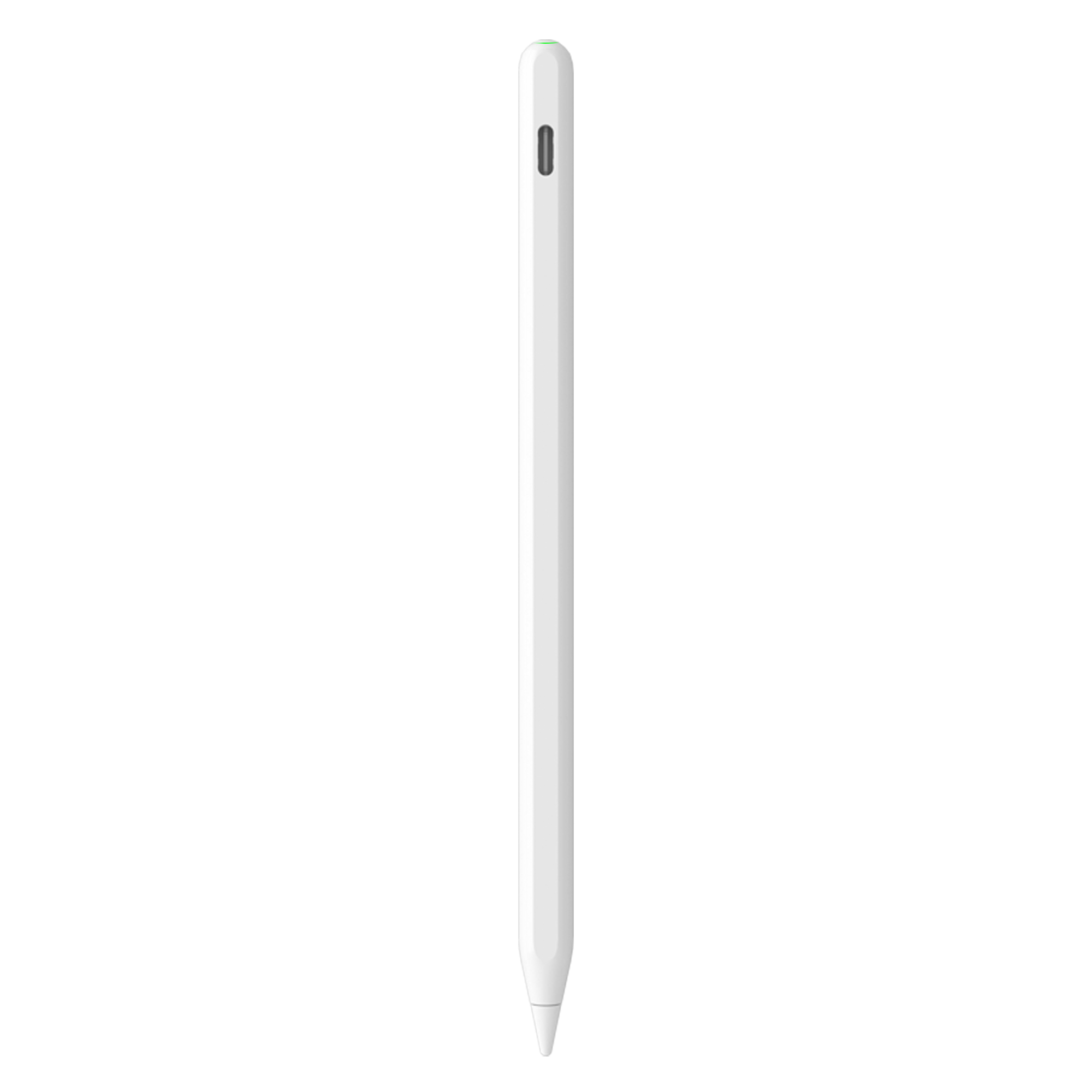
Palm rejection, tilt sensing and pressure sensing are three different capabilities, and a typical third-party active stylus carries two of them. Jiayao's own comparison states the position plainly: its active pens match Apple Pencil on precise writing, palm rejection and the pause/doodle shortcut, but they do not include pressure sensing — tilt sensing is the substitute.
That single sentence decides the SKU. A pen without pressure sensing is a note-taking and annotation tool; it is not a professional drawing instrument. Pressure sensing also has a measurable ceiling in the market, with Samsung S-Pen and high-end professional active pens reaching up to 4,096 pressure levels per Samsung Electronics. A brief that specifies that class of drawing performance should not be sourced from a tilt-sensing SKU, and a brief that specifies note-taking does not need to pay for pressure hardware.
Tilt sensing deserves to be named separately, because it is what produces line-weight variation and shading without pressure hardware. When the requirement is “drawing” rather than “illustration”, tilt plus palm rejection is usually the correct specification.
Parameter 4 — Charging method and runtime
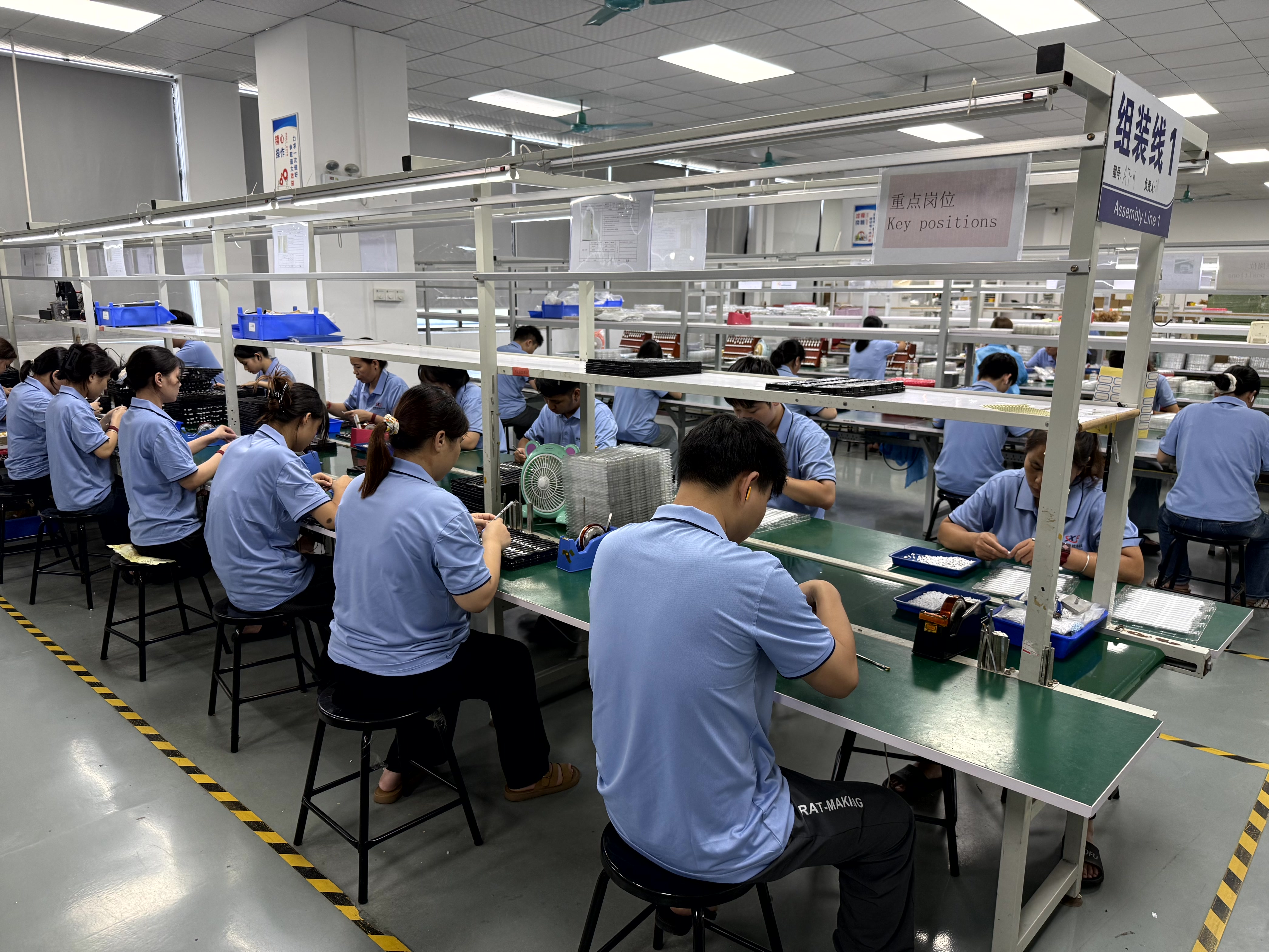
Charging behaviour is a manufacturing variable, not a footnote. Jiayao designs the PCBA and welds the battery in-house before final assembly and testing, so charging method, charge time and runtime are set at the factory rather than assembled from an external module. Three configurations in the catalogue answer three different buyer needs:
- W12-A — wireless charging plus a USB-C port, so the pen can charge on a wireless pad or by cable; the USB-C port also provides fast charging alongside wireless charging.
- A7-H-L — five minutes of charging delivers two hours of use, for channels where the pen is shared or rarely docked.
- E3-A — 30 hours of continuous use after a full charge, for long-shift or classroom deployment.
Ask for the charge-to-runtime ratio rather than battery capacity alone. A 5-minute/2-hour ratio and a 30-hour runtime answer different operational questions, and both should be written into the quotation before the order.
Parameter 5 — How third-party active styluses differ from Apple Pencil
A third-party active stylus is not a clone of Apple Pencil, and the difference is documented feature by feature rather than implied. According to Jiayao's product comparison, the pens share precise writing, palm rejection and the pause/doodle shortcut. The divergence is pressure sensing: Apple Pencil includes it, the third-party pens do not, and tilt sensing covers part of the same use case.
Cost follows the same line — Apple Pencil is considerably more expensive than a third-party stylus. The practical split is by user, not by budget: an artist who needs precise, pressure-driven drawing should stay with Apple Pencil, while a user who needs note-taking and drawing on an iPad can work with a third-party active pen.
Parameter 6 — What the supplier can prove in writing
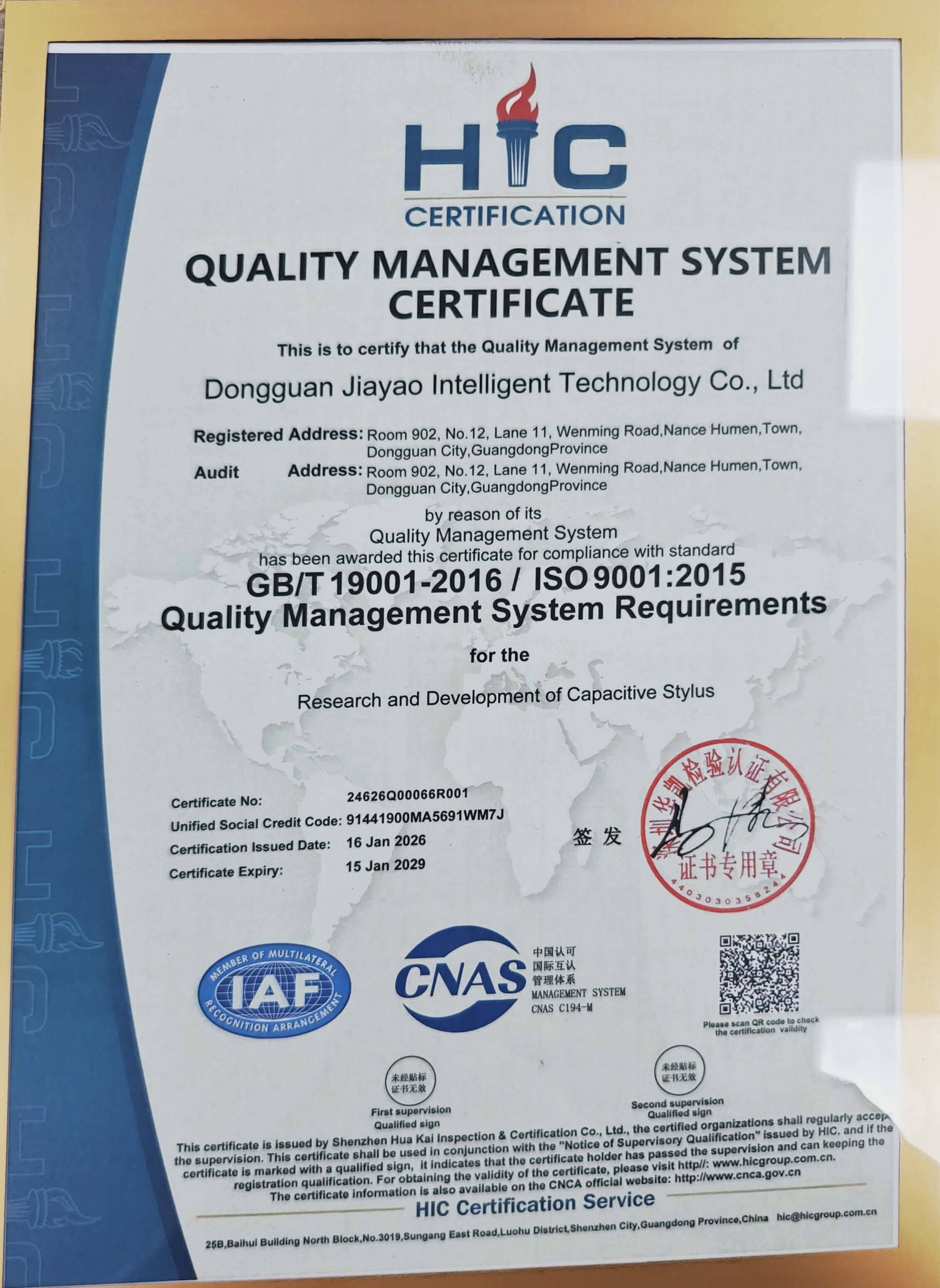
Every parameter above is only as reliable as the document behind it. Jiayao holds an EU ROHS certificate of conformity (BAC260390119R, issued 9 March 2026 by Shenzhen Bory Technology Service Co.,Ltd, tested against the IEC 62321 series) and an ISO 9001 quality management system certificate (24626Q00066R001, issued 16 January 2026 by HIC Certification Service, scope “Research and Development of Capacitive Stylus”, GB/T-19001-2016 / ISO 9001:2015, valid to 15 January 2029).
The scope lines matter as much as the numbers. A ROHS certificate naming a model scope does not automatically cover a new model added to the same family, and an ISO 9001 scope covering R&D of capacitive stylus is a statement about design and development control rather than about every process on the floor. Buyers should ask which document covers which model and which activity.
Step-by-Step Breakdown: seven questions, in the order that saves money
The sequence below runs from device validation to commercial terms, so that a “no” at any step stops the process before a sample budget is spent.
- Which device models and OS versions has this SKU been validated on? Ask for named families, not categories. If the answer is “all iPads and Android tablets”, the SKU is probably a universal model and the answer should be reframed as a device list.
- Is the pen active or passive, and does palm rejection exist in hardware? A passive pen cannot deliver palm rejection, tilt sensing or offset-free writing. This is the fastest way to separate a real specification from a borrowed one.
- Which input features does the SKU physically support — pressure, tilt, or both? Jiayao's active pens offer tilt sensing without pressure sensing; Apple Pencil includes pressure sensing. Match the feature to the use case before matching the price.
- How is the pen charged, and what is the charge-to-runtime ratio? Wireless charging plus USB-C (W12-A), 5 minutes for 2 hours (A7-H-L) and 30 hours per full charge (E3-A) cover three different deployment models.
- Which certificate covers my model, and what is the certificate number? Request the ROHS certificate (BAC260390119R) and the ISO 9001 certificate (24626Q00066R001) with their scope lines, then verify that the ordered model falls inside them.
- What is the sample path and how long does it take? Samples can be ready in as little as three weeks, and customisation of function, colour, shape, tip, logo and packaging is inside the OEM/ODM scope — so the sample stage is where customisation is proven, not where it begins.
- What are the commercial and after-sales terms? MOQ 500 units; payment 30/70; delivery EXW/FOB; acceptance by pre-shipment inspection; standard orders shipped in 20 days with a 20–35 day lead time; monthly capacity 500,000 units; 100% inspection covering functional, tactile and visual checks; one-year warranty with one-to-one replacement.
Use Cases: how the parameters resolve in real programs
Mixed-ecosystem retail channel — Turkey
A tablet accessory ODM in Turkey ordered 5,000 universal stylus units for precise writing on iPad, iPhone, Android tablet and Android phone, over a two-year supply relationship. The stated result was higher usage of iPads and Android tablets among its customers. The parameter that made this work was scope, not raw performance: one SKU, four named device families, and a universal fit statement that the channel could repeat in its own listing.
iPad accessory brand selling on e-commerce — Vietnam
An iPad accessory ODM in Vietnam ordered 3,000 units of the E3-A iPad Stylus Pen for precise writing on iPad and retail on an e-commerce platform, also over two years. The configuration highlights were precise writing, fast charging, long working hours, palm rejection and tilt sensing. Reported results were a smooth, precise handwriting experience, improved tablet operation efficiency and good user feedback — the combination that matters when reviews, not sales calls, decide repeat orders.
Matching configuration to task
- Note-taking and annotation: active pen with palm rejection and tilt sensing; no pressure hardware required.
- Drawing and sketching: active pen; decide whether tilt sensing is sufficient or pressure sensing is mandatory.
- Gaming on iPad or tablet: active pen — the experience is materially better than with a passive pen.
- Finger replacement on shared or public devices: passive pen; battery-free, low cost, no pairing.
- Long-shift or classroom deployment: E3-A at 30 hours per full charge.
- Shared pen pools with little docking time: A7-H-L at 5 minutes charging for 2 hours of use.
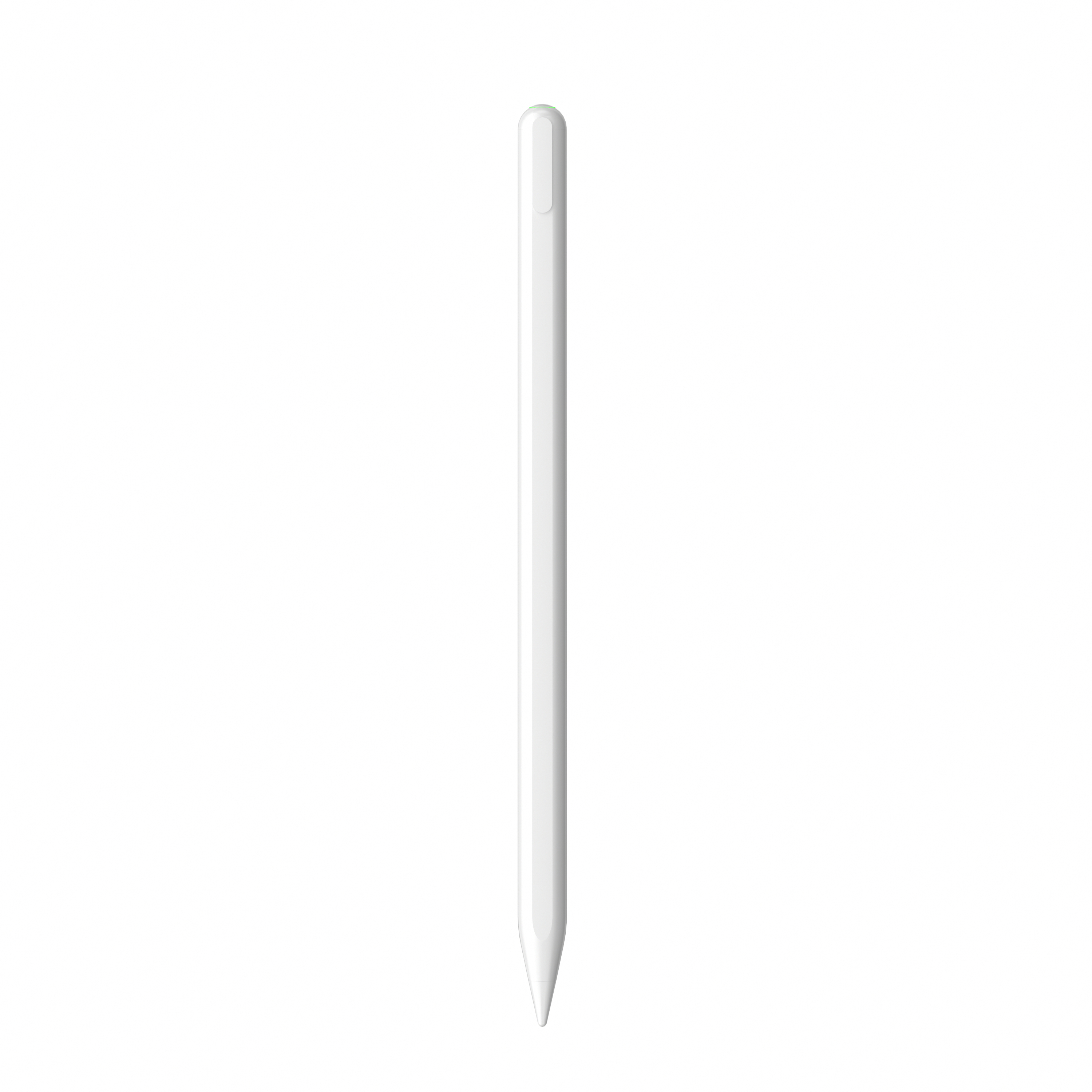
Comparison Table
Table 1 — Passive capacitive stylus versus active stylus (third-party). Both columns reflect the manufacturer's stated capability set, not a ranking of quality.
| Parameter | Passive capacitive stylus | Active stylus (third-party) |
|---|---|---|
| Power supply | None — battery-free | Rechargeable battery, required |
| Precise writing | No — latency and offset when writing | Yes |
| Palm rejection | Not supported | Supported |
| Tilt sensing | Not supported | Supported |
| Pressure sensing | Not supported | Not included on Jiayao active pens |
| Gaming on tablet | Basic input only | Better experience than passive |
| Best fit | Replacing a finger | Note-taking, drawing, sketching |
Table 2 — Third-party active stylus versus Apple Pencil. Based on the manufacturer's own feature comparison.
| Feature | Jiayao active stylus | Apple Pencil |
|---|---|---|
| Precise writing | Yes | Yes |
| Palm rejection | Yes | Yes |
| Pause / doodle shortcut | Yes | Yes |
| Pressure sensing | No | Yes |
| Relative purchase cost | Lower | Higher |
| Recommended user | Note-taking, drawing | Precise drawing / artist |
FAQ
What compliance documents should a China active stylus OEM provide before a tablet-brand order?
At minimum, a certificate of conformity for the target market and a quality management system certificate, both with visible numbers and scope lines. Jiayao holds an EU ROHS certificate of conformity (BAC260390119R, issued 9 March 2026 by Shenzhen Bory Technology Service Co.,Ltd, tested against the IEC 62321 series) and an ISO 9001 certificate (24626Q00066R001, issued 16 January 2026 by HIC Certification Service, scope “Research and Development of Capacitive Stylus”, valid to 15 January 2029). Production is covered by 100% inspection on functional, tactile and visual checks. The buyer's task is to confirm that the ordered model falls inside the certificate scope, because a document that names other models does not protect the shipment.
What can a China active stylus pen OEM customise for a tablet brand?
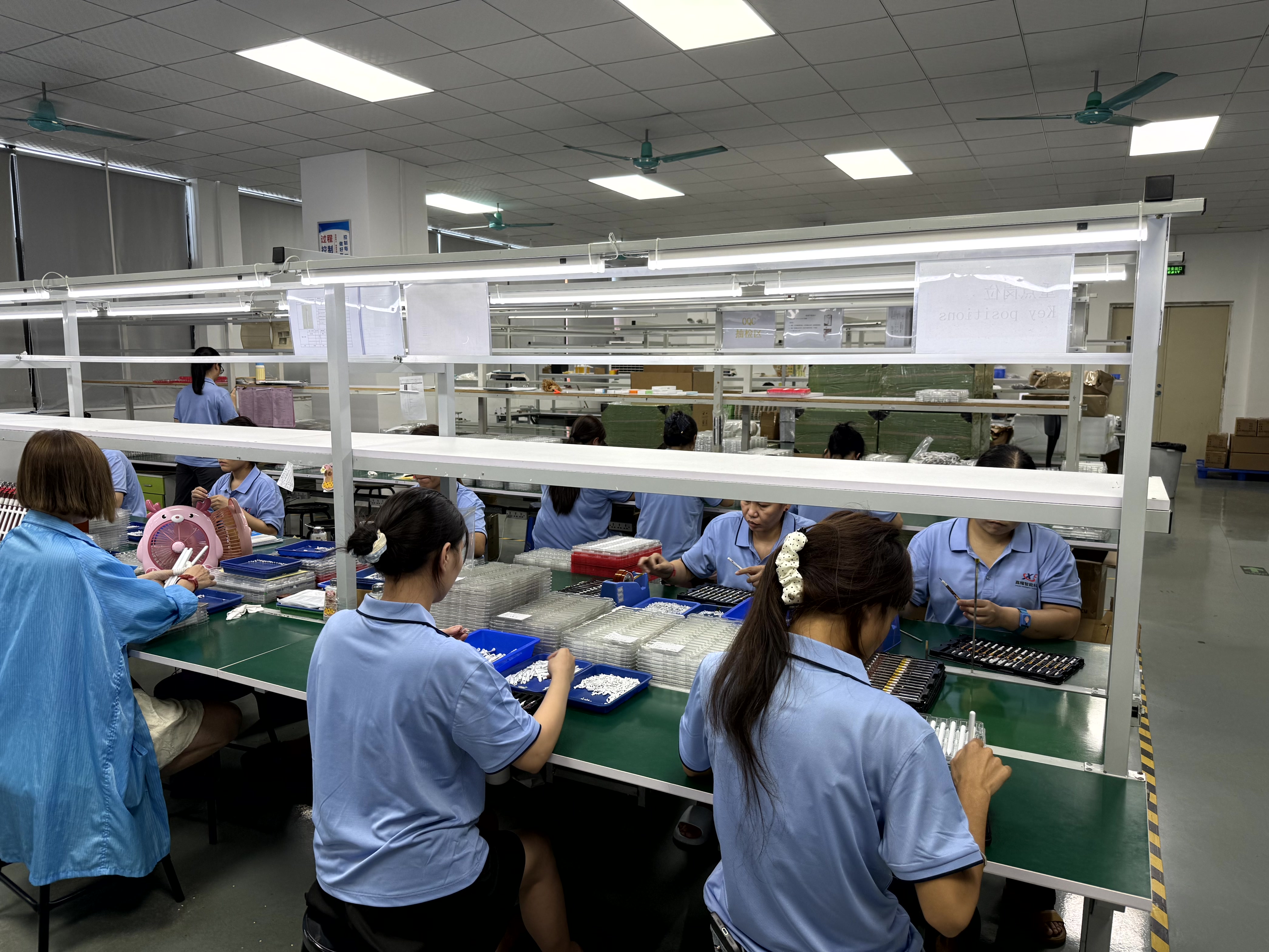
Jiayao supports both OEM and ODM projects, with customisation covering function, colour, shape, tip, logo and packaging, plus Bluetooth name for paired models. The capability sits in-house rather than with subcontractors: PCBA design, battery welding, final assembly and quality testing are all performed internally by a 100-strong team that includes a four-engineer R&D group, in a 2,700 m² facility with monthly capacity of 500,000 units and annual output of 3,000,000 units. Customisation is normally proven at the sample stage, not after the bulk order is placed.
What MOQ and payment terms should I expect from a China stylus pen OEM?
Jiayao's standard terms are a 500-unit MOQ, 30/70 payment terms, EXW or FOB delivery, and acceptance by pre-shipment inspection. Because 500 units is a low entry point for an electronics accessory, the more important commercial question is usually not the MOQ itself but whether the supplier holds stock of regular models to absorb small, scattered and urgent orders — which Jiayao states as part of its delivery model.
How long does a stylus sample take before a bulk order?
Samples can be ready in as little as three weeks, including customisation of function, colour, shape, tip, logo or packaging where the brief requires it. The sample is where the technical parameters in this guide should be verified in practice: palm rejection behaviour in the target app, tilt response, charging method and the charge-to-runtime ratio. Approving a sample against an unnamed device list simply moves the mismatch into the bulk order.
What is the production lead time and capacity for a repeat order?
Standard orders ship in 20 days, with lead times of 20–35 days depending on configuration and customisation, against monthly capacity of 500,000 units and annual output of 3,000,000 units. Repeat orders are covered by the same 100% inspection routine and a one-year warranty with one-to-one replacement. Buyers who want to check these parameters against their own device list can request a sample or a quotation through the Jiayao Stylus catalogue and contact channels below.
Next step: verify the parameters against your device list
Jiayao Stylus supplies iPad Stylus Pen, iPad and Android Stylus Pen and universal Stylus Pen models for OEM and ODM programs, with samples in as little as three weeks and standard orders shipped in 20 days.
Download the full product catalogue with model specifications: Jiayao Intelligent Stylus Pen Catalogue (PDF)
Email: LeaTan@dg-xcdz.com | WhatsApp: +86 166 2065 1838 | Website: jiayaostylus.com
Dongguan Jiayao Intelligent Technology Co.,Ltd — Room 9th Floor, No.12, Lane 11, Wenming Road, Nanzha, Humen Town, Dongguan, Guangdong, China
Conclusion
Active versus passive sets the architecture; iPad versus Android sets the device scope; palm rejection, tilt sensing and pressure sensing set the use case; charging method and runtime set the operating model; and certificate scope, inspection routine, MOQ and lead time set the commercial risk. A stylus pen that passes all five checks is a specified product. One that passes only the first two is a specification sheet.
The differences against Apple Pencil are narrower than marketing usually suggests and wider than price alone implies: precise writing, palm rejection and the pause/doodle shortcut are shared, pressure sensing is not, and tilt sensing covers part of the gap. Buyers who write that distinction into their brief get quotations they can compare — and pens their users can actually work with.
Have Questions or Need More Details?
Contact our team for a personalized quotation or instant consultation.
Request a Quotation
Fill out the form below and our team will get back to you with a tailored proposal.
WhatsApp Direct Chat
Prefer to chat in real-time? Message us on WhatsApp for instant assistance & quick answers.
- Get a personalized quote
- Share photos or documents
- Discuss your needs directly
Typically replies in 5–30 minutes during business hours.