
Stylus Pen Application Guide: Mixed iPad & Android Rollouts
Stylus Pen Application Guide: Mixed iPad & Android Rollouts
Short answer: in a program that runs both iPads and Android tablets, choose the stylus per user group, not per purchase order. Task-light shared devices can run on a passive stylus, because it needs no battery and no pairing. Anyone who writes, annotates or draws needs an active stylus that is charged before the shift and specified with palm rejection and tilt. Any group that must use both platforms at the same desk needs a model specified for both. Then fix the order around six written items: device scope, charging method, runtime per charge, spare tips, warranty and an acceptance test run on your own tablets.
A mixed-device rollout is a procurement problem disguised as an accessory purchase. The tablets are already there, inherited from an earlier project or bought department by department, and the stylus is the last component ordered and the first one users blame when writing feels wrong.
This guide is written for the people who sign that order: project buyers, procurement officers, and IT or operations managers running tablet programs in education, field service, retail and studio work. It maps stylus types to deployment scenarios, explains when a passive pen is enough and when an active one is required, sets out how to compare a third-party stylus with Apple Pencil, and finishes with the purchasing terms and acceptance criteria that keep a multi-device program from stalling after delivery. Where a model parameter is not stated, this guide says so rather than filling the gap.
The supplier referenced here. Jiayao Stylus (Dongguan Jiayao Intelligent Technology Co.,Ltd) is an active stylus pen manufacturer based in Dongguan, Guangdong, China, founded in 2021, operating a 2,700 m² facility with around 100 employees, four R&D engineers and an annual output of 3,000,000 units. The range covers iPad stylus pens, Android stylus pens and universal models specified for both iPad and Android tablets.
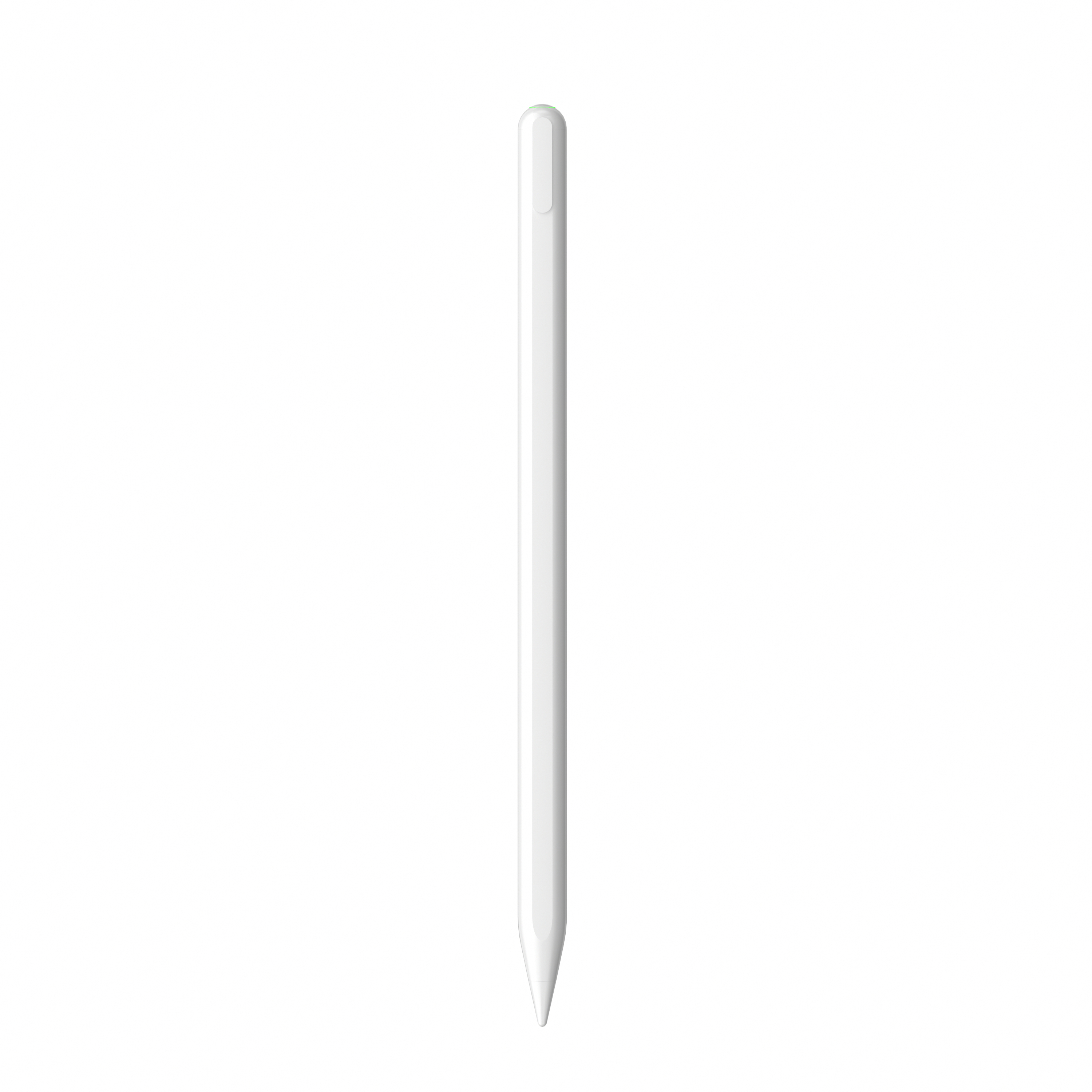
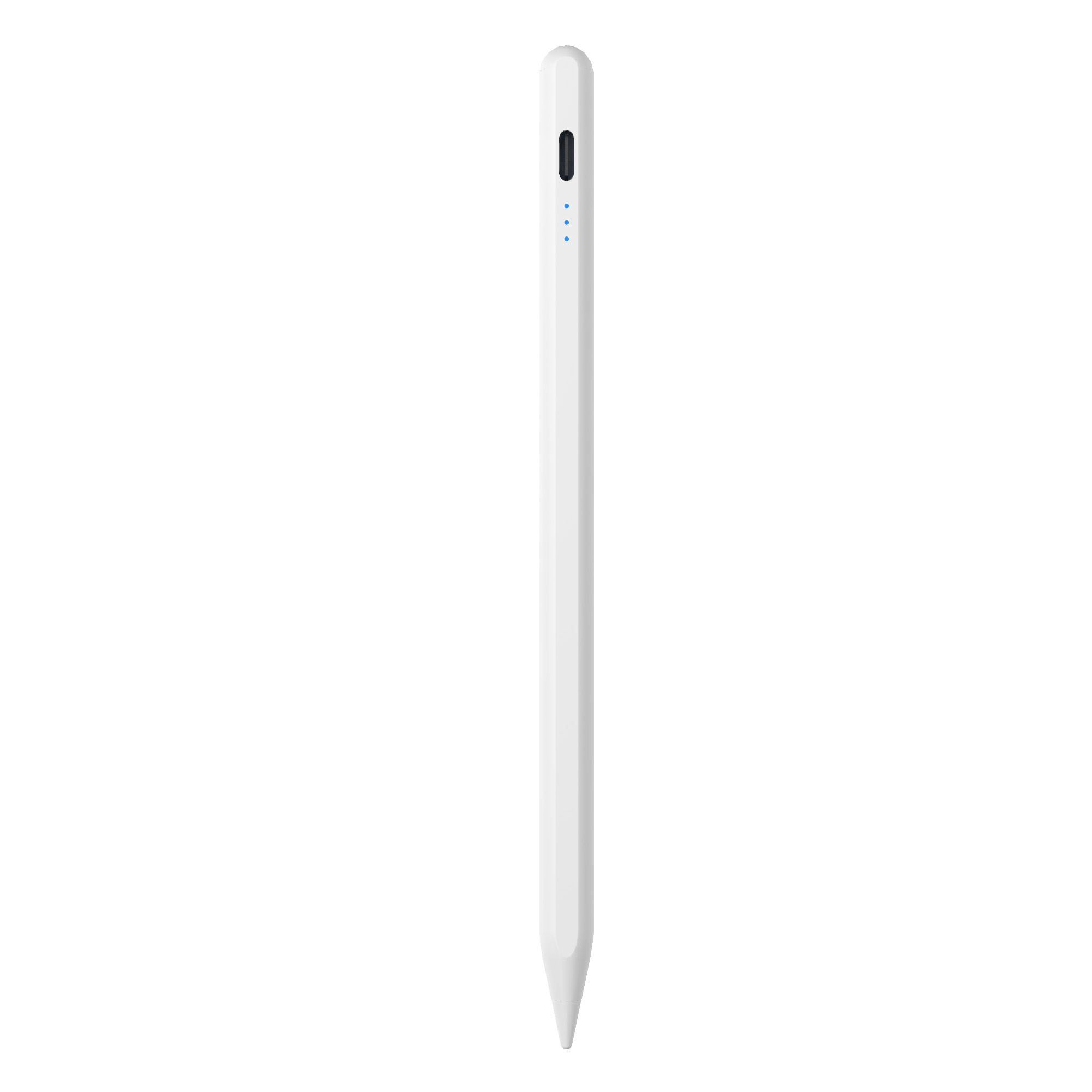
A stylus pen supplied under a customer ODM program — the model that anchors a mixed-device purchase order.
1. The problem: one purchase order, two device platforms
Mixed deployments fail in three predictable places, and none of them is about brand preference.
Feature mismatch. A pen specified for iPad does not automatically deliver the same behaviour on an Android tablet. In the Jiayao range, palm rejection and tilt are listed parameters on specific iPad models such as A30-B, A21B, A8-RH and A7-H-L, while the Android-oriented S3-GC parameter table does not list them. That does not mean the function is absent; it means the sheet does not claim it, and a buyer should not assume it.
Charging logistics. An active stylus needs a charged battery before it works at all: the pen transmits a weak electrical signal that the touch-screen detects in order to locate the tip. Thirty tablets shipped with thirty active pens create a daily dependency that passive pens never create.
Tips and spares. Interchangeable nibs are listed across the range, which is good for service life and bad for planning if nobody orders the spares. A program standardised on two models holds one tip SKU; a program that buys five holds five.
Device inventory sharpens the problem further. The iPad models in this range are specified for iPad models from 2018 onward running iPadOS 12.2 and above. Android tablets have no equivalent single baseline, so the only reliable test is your own device list.
2. Industry background: how the category is structured in 2026
Market sizing for styluses is wide because the category boundary is not fixed. IMARC Group reported the global stylus pen market at USD 19.45 billion for 2025, while a Fortune Business Insights figure for the same year is far lower at USD 3.36 billion; the gap reflects what each house counts as a stylus pen rather than a disagreement over one measurement. Treat published totals as directional and never build a business case on a single number.
Growth projections carry the same caveat. Dataintelo projects a 9.8% CAGR for active stylus technology from 2026 to 2034 — a forecast that depends on its own assumptions and should be read as a scenario, not an observed result.
Two structural facts matter more to a buyer than the totals. Cross-platform standards exist: USI 2.0, released in 2022 and supported by Google, Intel and Lenovo, is the main open specification for active styluses. Proprietary implementations still dominate the premium end; Samsung documents up to 4,096 pressure levels for its S Pen. A mixed fleet sits between those two worlds, and no purchasing document should imply that one pen will expose identical features on both platforms.
On the trade side, stylus pens are typically classified under HS code 8471.60.90 as automatic data processing input units — the reference point your customs broker will expect on the commercial invoice.
3. Passive or active: the first fork in every scenario
Passive stylus. A passive capacitive stylus has no battery, no charging and no pairing; it works by contact, in the same way a fingertip does. For a rollout that is a real advantage — nothing to charge, nothing to configure, and a pen that can be handed to a visitor without explanation. The trade-off is functional: because it generates no signal of its own, it cannot deliver the battery-powered behaviours that active pens are specified for.
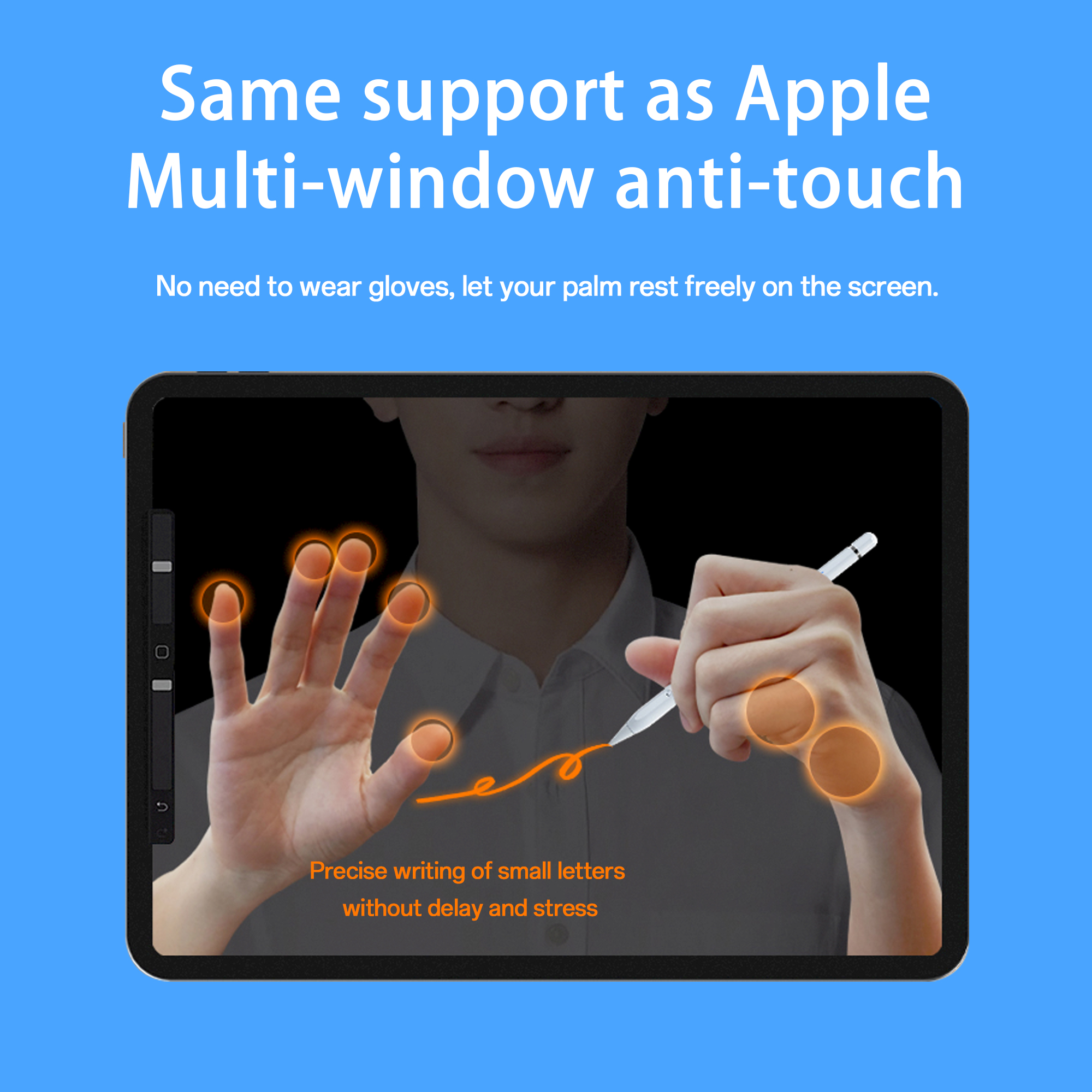
Active stylus. An active stylus carries a battery and must be switched on before the tablet registers it as a precision input. In exchange it unlocks what tablet programs actually need: palm rejection so a hand can rest on the screen, tilt response for shading, replaceable nibs, side magnetic attachment for storage, and the no-offset, no-delay writing behaviour described across the Jiayao range.
Hybrid option. The A21B is described as a 2-in-1 iPad stylus pen with a universal passive fiber tip alongside its active function, plus palm rejection, tilt sensing and side magnetic attachment. Where some tasks are simple navigation and others are annotation, a hybrid reduces the number of SKUs a supervisor manages.
A practical rule: if the job can be done with a fingertip, a passive stylus improves accuracy without adding an operational burden. If the job involves handwriting, forms, drawing or mark-up, specify an active pen and fund the charging routine that comes with it.
4. Mapping stylus models to five deployment scenarios
Scenario A — shared tablet carts in classrooms or training rooms
Shared carts mean many users, short sessions and no personal ownership of the pen. Prioritise runtime per charge, palm rejection, replaceable tips and a charging routine the site can actually operate. The A7-H-L is listed with 16 hours of working time and is classified for the education industry; the E3-A is listed at 44 hours, the longest runtime in the referenced range, with automatic power-off after 60 minutes. Where a magnetic charging tray is practical, the W13-A charges in 15 minutes by cable or 60 minutes magnetically and runs for 9–10 hours.
Scenario B — one desk, both platforms (reception, service counter, kiosk)
Here the pen moves between an iPad and an Android tablet in the same shift. The R3-P is the model specified for both: an iPad and Android stylus pen for iPad and Android tablets, Type-C charged in 40 minutes, 9–10 hours of working time, side adsorption, and a 164.6 mm aluminium body at 13 ± 1 g. Accept that a universal pen will not necessarily expose every platform-specific feature on both devices, and put that expectation into the acceptance test instead of discovering it at the counter.
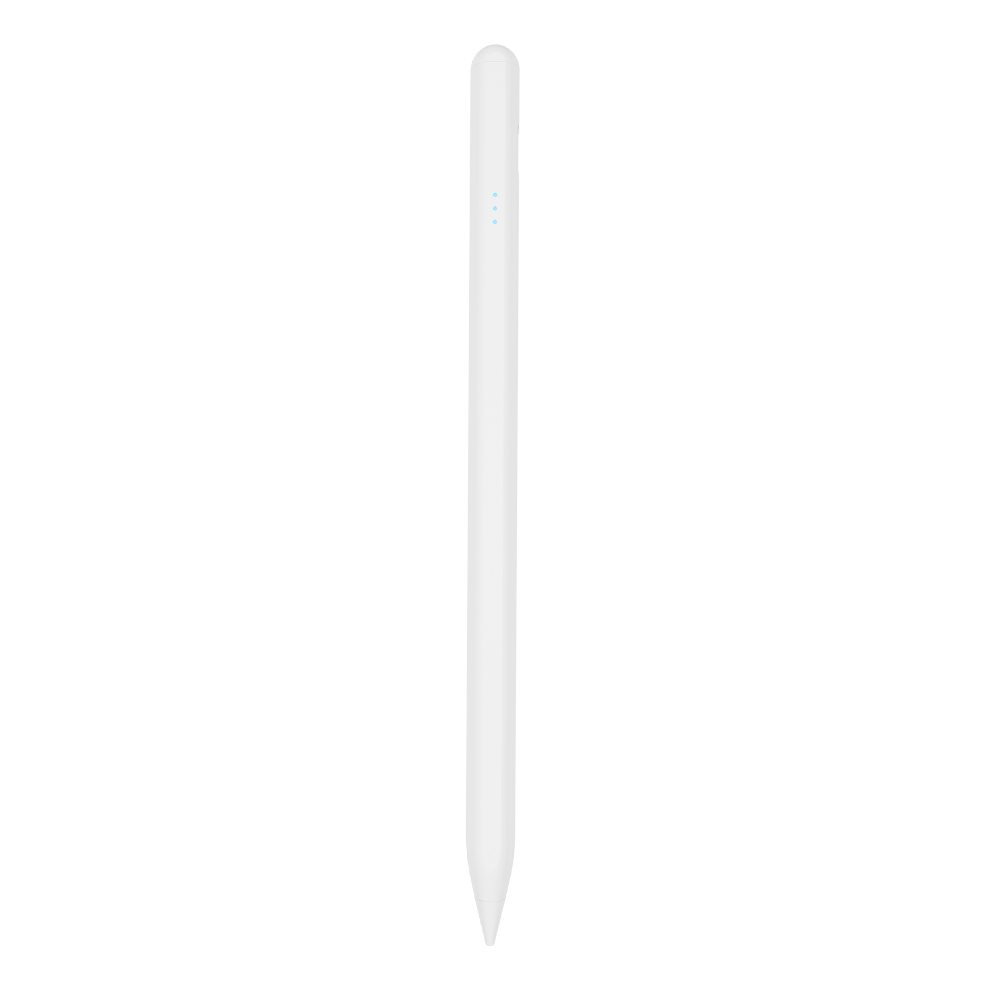
Scenario C — Android-only device pools inside a mixed program
Where one department runs Android tablets only, the S3-GC is the narrower fit: an Android universal stylus pen with a 55-minute Type-C charge, 10 hours of working time, automatic power-off after 10 minutes and side adsorption. Keeping Android-only groups on an Android-specific pen avoids paying for dual-platform flexibility they will never use.
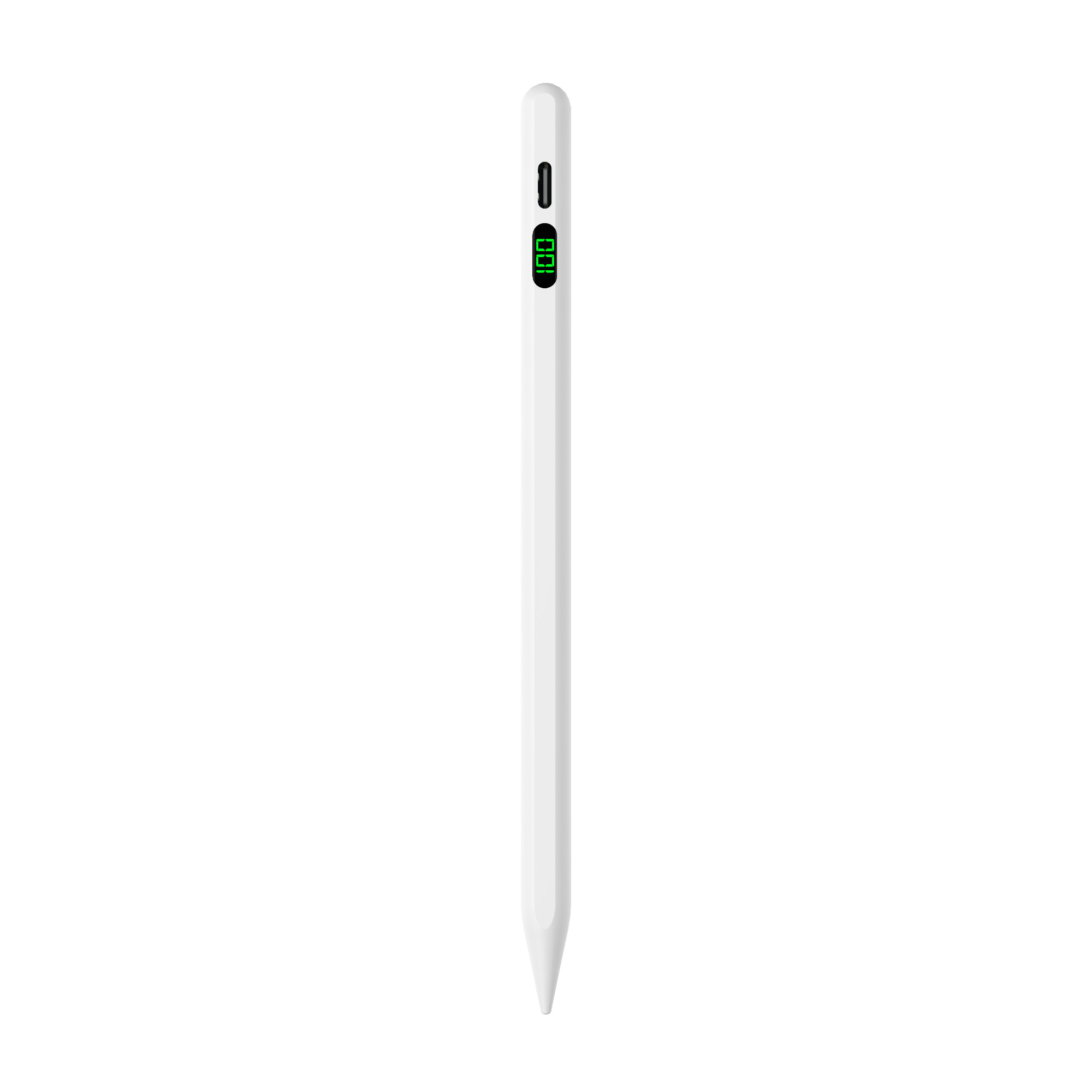
Scenario D — annotation-heavy iPad work (drawing, review, marking)
Where the pen is the working tool rather than a pointer, the specification should name palm rejection and tilt explicitly. The A30-B lists palm rejection and tilt bold, a 25-minute Type-C charge, 11 hours of runtime, a 165 mAh battery and a shortcut button on an aluminium body. The A8-RH lists palm rejection and tilt with a 30-minute charge, 12 hours of runtime and a finer 1.2 mm nib diameter. Both state no offset and no delay.
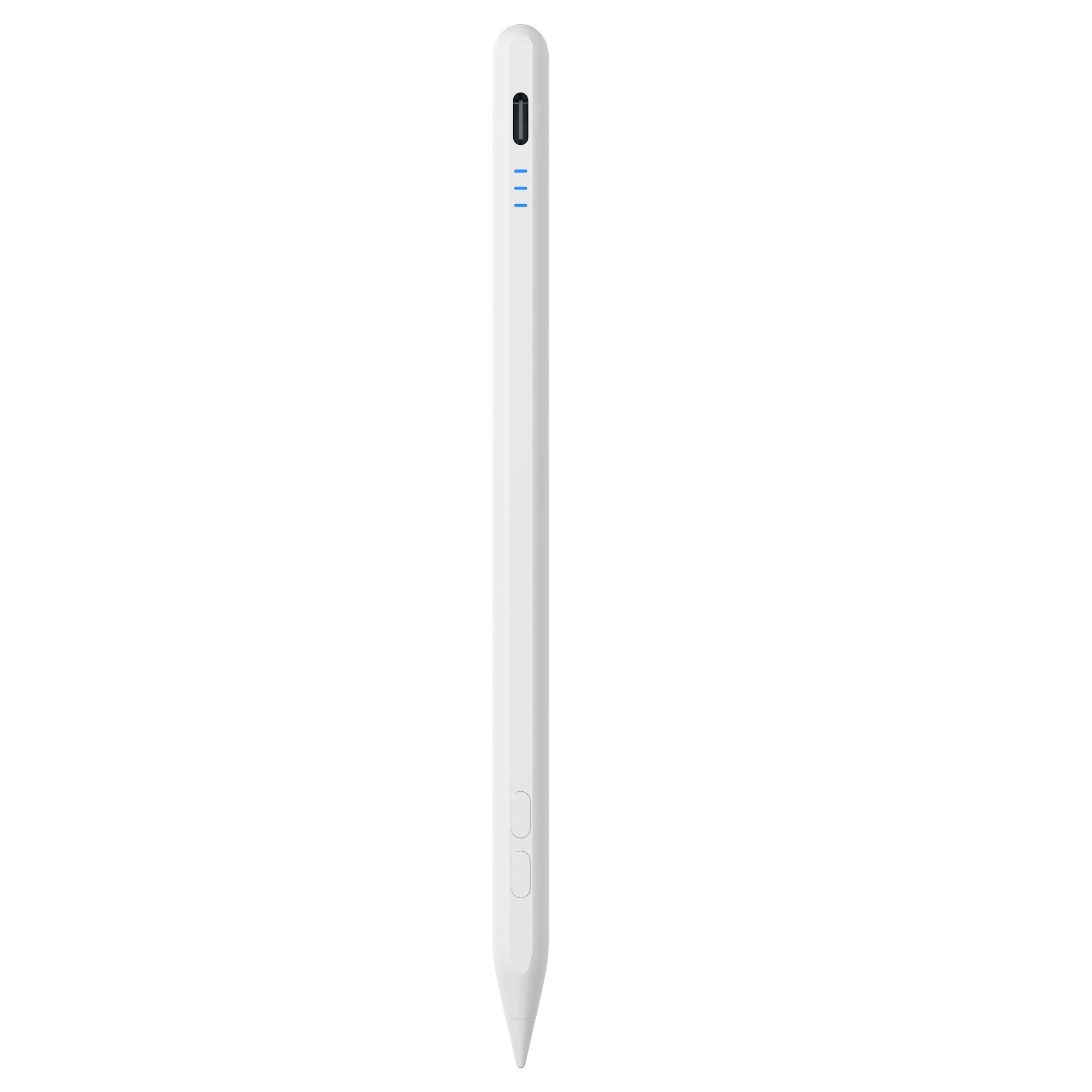
Scenario E — sites without reliable charging discipline
If nobody will own a charging schedule, runtime and power management become the selection criteria, and passive pens become viable for task-light work. Inside the active range, the longest listed runtime (E3-A at 44 hours) plus automatic power-off minimises pens that arrive flat; its 230 mAh battery and 15 ± 1 g body are the trade-off against the lighter 12–13 g models.
5. Comparison table: documented specifications side by side
| Model | Device scope (as stated) | Charging (stated time) | Runtime per full charge | Palm rejection / tilt (listed) | Side adsorption |
|---|---|---|---|---|---|
| R3-P | iPad and Android tablets | Type-C, 40 min | 9–10 hours | Not listed | Yes |
| S3-GC | Android universal | Type-C, 55 min | 10 hours | Not listed | Yes |
| A30-B | iPad 2018+, iPadOS 12.2+ | Type-C, 25 min | 11 hours | Yes / Yes | Yes |
| A8-RH | iPad 2018+ | Type-C, 30 min | 12 hours | Yes / Yes | Yes |
| A7-H-L | iPad 2018+ | Type-C, 30 min | 16 hours | Yes / Yes | Yes |
| E3-A | iPad | Type-C, 40 min | 44 hours | Yes (model name) / Not listed | Yes |
| W13-A | iPad 2018+, iPadOS 12.2+ | Cable 15 min; magnetic 60 min | 9–10 hours | Not listed in parameters | Yes (11 and 12.9 inch iPad) |
| W3-H | iPad 2018+ | Magnetic, 70 min | 11 hours | Not listed | Yes |
Every value above is copied from the model parameter tables. “Not listed” means the parameter table does not state the item; it is not evidence that the function is missing. Prices, MOQs and lead times are commercial terms and are not part of this table.
6. Comparing a stylus with Apple Pencil during evaluation
Apple Pencil is Apple's own active stylus for iPad and is the natural reference point in any iPad program. For procurement, the useful comparison is a fit test on five dimensions, not a feature shoot-out.
- Device scope. Apple Pencil is designed for iPad. A third-party universal model such as the R3-P is specified by its manufacturer for iPad and Android tablets, which is why it exists in mixed fleets at all. If your fleet is iPad-only, that scope advantage disappears and the decision returns to features and terms.
- Feature documentation. Compare only what each side publishes. A first-party specification and a supplier parameter table are not automatically measured the same way, so require a demonstration on your own devices rather than accepting a side-by-side number list.
- Charging and storage. Note how each pen charges and whether it attaches magnetically. In this range, W13-A and W12-A support magnetic plus Type-C charging, W3-H charges magnetically only, and side adsorption on W13-A and A21B is stated for 11-inch and 12.9-inch iPads specifically.
- Service life and spares. Interchangeable nibs and a stated warranty matter more than a marginal feature difference across a three-year rollout. Jiayao states a one-year warranty with one-to-one replacement.
- Commercial terms. MOQ, lead time, branding and packaging are where third-party supply usually differs most: Jiayao lists an MOQ of 500 pcs, a lead time of 20–35 days, OEM/ODM customization of function, color, shape, tip, logo and packaging, and Bluetooth name customization described in the company profile. Apple Pencil is bought as a finished first-party product, so a requirement such as a school logo on the pen decides the category on its own.
The correct output of this stage is a documented decision per user group — which pen, on which device, with which features verified and which terms accepted — not a verdict on quality in either direction.
7. Step-by-step: setting purchase terms and acceptance criteria
Step 1 — Inventory the device pool
List every iPad model and iPadOS version (the iPad range here is specified for 2018-and-later iPads on iPadOS 12.2 and above), every Android tablet model and version, the cases actually in use, and the charging points available. A thick case alone can defeat magnetic attachment, so test with the case fitted.
Step 2 — Assign each user group to a scenario
One line per group: scenario, pen type, model, feature minimums. This document becomes the annex to the purchase order and the basis for every later dispute.
Step 3 — Order samples before committing
Jiayao states samples in as little as 3 weeks. Order every candidate model, not one, and test on the oldest tablet in the fleet, where compatibility problems appear first.
Step 4 — Write acceptance criteria as tests, not adjectives
Suggested tests: the pen writes on every device in the pool; a resting palm produces no strokes where palm rejection is specified; tilt changes line weight where tilt is specified; magnetic attachment holds on the specified iPad sizes; runtime and charge time match the parameter table in a timed test; tips are replaceable and a stated spare ratio per 100 pens is delivered; packaging and labeling match approved artwork.
Step 5 — Fix the commercial terms in writing
Record the MOQ (500 pcs per model in the Jiayao capability data), the lead time (20–35 days, with standard orders shipped in 20 days per the company profile), the one-year warranty with one-to-one replacement, who pays return freight on warranty units, and whether spare tips ship in the same carton. The company runs 100% full inspection covering functional, tactile and visual checks, so ask for the inspection record with each shipment.
Step 6 — Plan charging and spares as part of the rollout
Choose the charging method per site (Type-C only, magnetic only, or both), name one person accountable for charging, and stock tips at the same ratio across all models so no single SKU runs dry.
Step 7 — Pilot, review, then release the balance
Run a small pilot against the Step 4 criteria, record failures by model and scenario, and only then release the remaining order. The pilot is also where you confirm whether the universal pen meets both platform groups in practice.
8. Use cases from mixed-device programs
Two recorded programs show how this mapping works in practice. Both are supplier-recorded cases describing what was supplied and what the customer reported; they are not a guaranteed outcome for other buyers.
Turkey — tablet accessory ODM, 5,000 units over two years. A tablet accessory ODM was supplied with a universal stylus pen fitting iPad, iPhone, Android tablet and Android phone for precise writing. The recorded result is that the pens boosted usage of iPads and Android tablets. The structural lesson for a project buyer is that a single universal SKU reduced the number of variants the ODM had to stock.
Vietnam — iPad accessory ODM, 3,000 units over two years. This program used the E3-A for precise writing on iPad and retail sale on an e-commerce platform. The recorded highlights are precise writing, fast charging, long working hours, palm rejection and tilt pressure sensing, with reported results of a smooth handwriting experience, improved tablet operation efficiency and good user feedback. The detail that matters for a mixed rollout is that palm rejection and long runtime were the features the customer chose to compete on.
9. FAQ
What documentation should accompany a stylus order for a mixed-device program?
At minimum: a commercial invoice with the correct HS classification (stylus pens are typically classified under HS code 8471.60.90), the parameter sheet for every SKU, approved packaging artwork, and the warranty terms in writing. Certification documents depend on the destination market and on the product's battery and wireless functions, so confirm the exact list for your market with the supplier before the order is placed rather than assuming a standard set. Jiayao states 100% full inspection covering functional, tactile and visual checks on every unit, so request the inspection record with the shipment.
Can one pen model serve both the iPad and the Android groups?
In this range the R3-P is specified for iPad and Android tablets, so basic writing on both platforms is its intended use. Feature-level behaviour is a separate question: palm rejection and tilt are listed on specific iPad models rather than on the universal pen's parameter table. If both groups need palm rejection, either treat the universal pen as a writing-only tool for the mixed desks or split the order by platform.
What drives the cost of a mixed-device stylus program?
The main cost drivers, in order of impact, are: passive versus active construction (battery, charging circuit, electronics), charging method (Type-C only versus magnetic plus Type-C), battery capacity and runtime, replaceable tip supply, number of SKUs (each model carries its own MOQ and spare parts), branding and packaging customization, and warranty handling. Unit price has to be quoted per configuration; published category figures are not a substitute for a quotation against your specification.
How should we run the sample stage?
Request samples of each candidate model, test them on the oldest tablet in the fleet, and score them against your acceptance criteria rather than against impressions. Jiayao states samples in as little as 3 weeks. Test hand-written latency, a resting palm, tilt response where specified, magnetic attachment with your real cases fitted, one full charge cycle with a timer, and tip replacement.
What lead time should we plan for, and what is the next step?
Jiayao's capability data states a lead time of 20–35 days, with standard orders shipped in 20 days, a monthly capacity of 500,000 units and samples in as little as 3 weeks. Plan the pilot ahead of the bulk release and keep a buffer for first-shipment acceptance testing. To move forward, request a sample set and a quotation against your device list, or download the Jiayao Intelligent Stylus Pen Catalogue (PDF) for the full model range. Contact: Lea Tan, LeaTan@dg-xcdz.com, +86 166 2065 1838.
Conclusion
A mixed iPad and Android rollout is decided by mapping, not by picking a favourite pen. Split the fleet by scenario, choose passive where the work is navigation and active where it is writing, use the universal model only where one pen genuinely has to move between platforms, and let parameter tables rather than sales language define what you are buying.
The purchasing side is where most programs are won or lost: a written device list, an acceptance test run on your own tablets, spare tips in the first carton, and terms that name the MOQ, the lead time and the warranty. Get those four right and the stylus stops being the component users complain about.
Have Questions or Need More Details?
Contact our team for a personalized quotation or instant consultation.
Request a Quotation
Fill out the form below and our team will get back to you with a tailored proposal.
WhatsApp Direct Chat
Prefer to chat in real-time? Message us on WhatsApp for instant assistance & quick answers.
- Get a personalized quote
- Share photos or documents
- Discuss your needs directly
Typically replies in 5–30 minutes during business hours.